
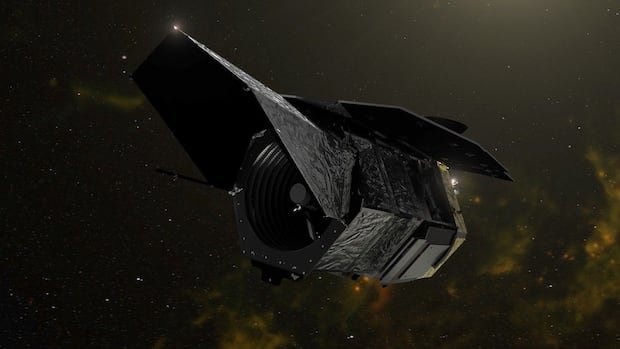
A new space telescope, the Nancy Grace Roman Space Telescope, is scheduled to launch from Cape Canaveral, Florida, atop a Falcon Heavy rocket at 7:26 a.m. on Sunday. Named after NASA’s first chief astronomer, known as the “mother of the Hubble Space Telescope,” it will orbit at a distance of 1.5 million kilometers at a point called L2. This location allows for a stable orbit due to gravitational forces and marks the beginning of a five-year mission that may be extended.
Different from existing telescopes like the Hubble Space Telescope, the Nancy Grace Roman Space Telescope boasts unique features such as a 2.4-meter mirror, a coronagraph to block starlight and reveal distant planets, and a Wide Field Instrument capable of imaging areas 100 times larger than the Hubble. Its advanced camera can capture billions of stars, enabling a wide range of sky and stellar surveys.
Astronomers are eager for the discoveries the Nancy Grace Roman Space Telescope may make, particularly in the search for exoplanets. Utilizing methods such as the transit technique and microlensing, the telescope aims to observe a significant number of stars and planets, potentially uncovering Earth-like planets.
Furthermore, the telescope will investigate dark matter and dark energy, comprising a significant portion of the universe. By studying hundreds of millions of galaxies, the mission aims to map the distribution of dark matter and normal matter, shedding light on the elusive nature of dark energy and its role in the universe’s expansion.

