
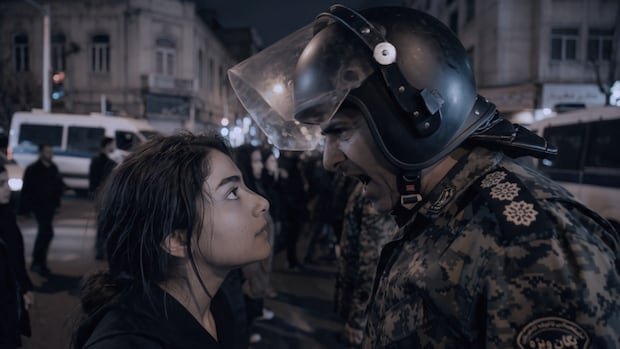
Tribeca Festival stands by its decision to showcase a feature-length AI-generated film in its lineup this year. “Dreams of Violets,” a 74-minute movie depicting the Iranian resistance, was crafted without traditional filming equipment or actors. Filmmakers Ash and Pooya Koosha utilized AI tools to bring the film to life at a minimal cost of $2,000.
The film’s trailer on YouTube describes it as a docudrama inspired by real events from 47 years of Iranian civilian resistance. The narrative revolves around five strangers witnessing protests unfold, with a young child in a wheelchair taking a bold stand.
In recent years, Iran has faced significant protests against its government, particularly over issues like morality policing, mandatory dress codes, and economic struggles. Despite criticism surrounding the use of AI in “Dreams of Violets,” Tribeca co-founder Jane Rosenthal defended the film, emphasizing its relevance and innovative storytelling approach.
While the movie is set to premiere in New York City on June 10, it is not the first to spark debates over AI’s role in filmmaking. Directors like Darren Aronofsky and Steven Soderbergh have embraced AI technology in their projects, while others, like James Cameron and Guillermo Del Toro, have expressed reservations.
Ash Koosha, the director and writer of “Dreams of Violets,” views AI as a distinct storytelling medium, akin to animation. Motivated by events in Iran, Koosha employed various AI tools to streamline production and tackle challenging subject matter.
The emergence of AI in filmmaking poses a dilemma for festivals, according to Richard Lachman, a digital media professor. While AI offers cost-effective avenues for creative expression, concerns linger about how audiences perceive AI-generated content and its potential impact on news credibility.
As the debate around AI in film continues, industry professionals emphasize the need for broader discussions on the implications of AI across various sectors, including entertainment.

