
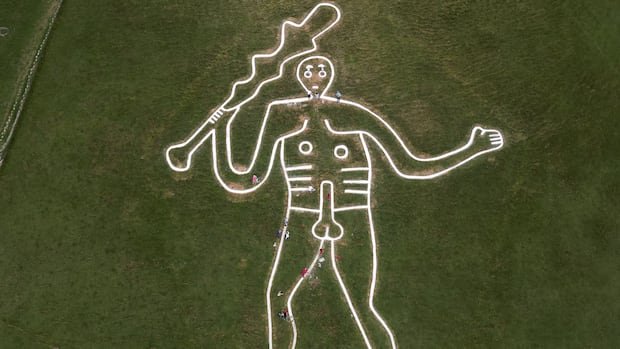
The residents of Cerne Abbas have a strong affinity for the iconic naked and well-endowed chalk figure that has overlooked their village in Dorset for generations. However, recent mild and wet winters have caused the 55-meter giant to be covered in grass and algae, obscuring its defining white lines.
Over 100 volunteers from the National Trust have been diligently working on the steep hill to restore the Cerne Abbas Giant to its former grandeur, enduring challenging weather conditions in the process. Liz Flight, the National Trust’s senior visitor experience officer, described the laborious task as demanding but necessary due to the giant’s beloved status in the community.
The origins of the Cerne Giant remain shrouded in mystery, with speculations ranging from Roman roots to a later Saxon period creation between 700 and 1100 AD. Despite uncertainties about its depiction and purpose, the giant, also referred to as “The Old Man” and “The Rude Man,” continues to captivate both locals and visitors.
Maintaining the hill figure is a significant undertaking for the National Trust, requiring periodic touch-ups every decade to preserve its cultural and archaeological significance. Flight emphasized the delicate balance between conservation efforts and protecting the landscape’s heritage while acknowledging the challenges posed by weather conditions accelerating the need for restoration this year.
Volunteers are diligently removing grass, clearing old chalk residue, and replenishing the figure with fresh white rocks to revive its striking appearance. Despite weather-related setbacks, the restoration work is progressing steadily, with the dedicated team committed to ensuring the Cerne Giant stands proudly once again on the hillside.
Flight, who has been involved in the restoration efforts before, highlighted the rewarding nature of the work, despite its physical demands. As the restoration continues, the Cerne Abbas Giant is poised to regain its prominence on the landscape, symbolizing the community’s dedication to preserving its historical and cultural heritage.

