
Canada’s economy showed signs of recovery in July with a 0.2% increase in the monthly gross domestic product (GDP) after three consecutive months of decline. Key sectors such as mining, manufacturing, and wholesale trade drove this growth, according to data released on Friday.
In the second quarter, Canada’s GDP had contracted by 1.6% annually, leading economists to closely monitor the July figures to gauge the potential for a contraction in the third quarter. A technical recession is typically declared after two successive quarters of contraction.
Statistics Canada indicated that while August was expected to see no growth, it would likely avoid contraction. However, this preliminary estimate is subject to change as it may not always be accurate.
Analysts had forecasted a 0.1% growth in Canada’s GDP for July, an improvement from the 0.1% contraction in June. Despite the positive growth, there are concerns about the underlying weakness in the economy, prompting expectations of further easing measures by the Bank of Canada.
The Canadian economy faced challenges in recent months due to U.S. tariffs impacting critical sectors. The Bank of Canada highlighted the adverse effects of trade disruptions and tariffs on key sectors, leading to decreased business investments and the potential for broader sectoral impacts in the future.
The growth in July was primarily driven by the goods-producing industries, which constitute about a quarter of the monthly GDP. The sector experienced a 0.6% growth for the first time in four months.
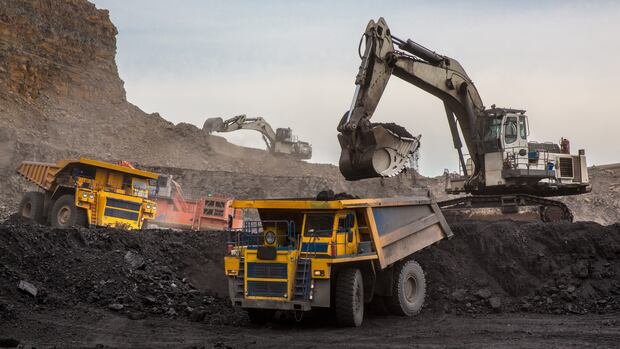
Among the industries, the mining, quarrying, and oil and gas extraction sector made the largest contribution to growth with a 1.4% increase. The manufacturing sector, heavily affected by U.S. tariffs and contributing significantly to GDP, grew by 0.7%, registering the second-highest growth rate.
On the services side, which makes up three-quarters of the monthly GDP, growth was modest at 0.1%. Wholesale trade and transportation and warehousing sectors supported this growth with a 0.6% increase each.
Noteworthy was the transportation and warehousing sector, which rebounded with a 2.8% growth driven by a 2.8% rise in pipeline transportation, marking its strongest growth since September 2022. Real estate and rental and leasing also saw growth of 0.3% in July, reaching a new record high for the second consecutive month.
However, the retail trade sector experienced a decline of 1% in July following robust growth in the previous month.

