
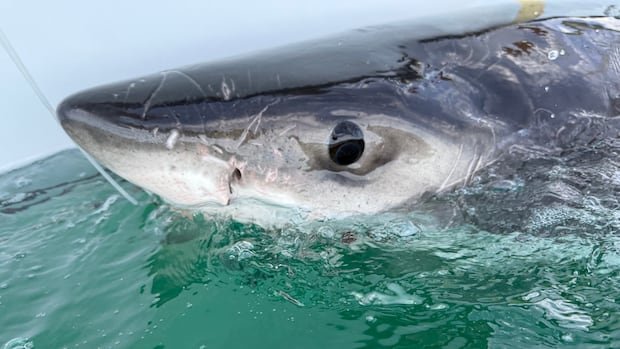
Bella, a juvenile great white shark measuring 10 feet and weighing over 730 pounds, has been spotted in the waters off Atlantic Canada this summer. Tracked by the OCEARCH shark tracking website, Bella was first seen near Quebec’s Magdalen Islands on July 4. This marked her first appearance in the Gulf of the St. Lawrence for the 2026 season, as reported by the St. Lawrence Shark Observatory.
Initially tagged in Mahone Bay, N.S., last year, Bella has journeyed from the Gulf of Mexico to the Gulf of St. Lawrence via Cape Cod, the Gulf of Maine, south shore of Nova Scotia, and north of Prince Edward Island. While her presence may raise concerns about great white sharks in Canadian waters, experts from the St. Lawrence Shark Observatory emphasize that it is a regular occurrence as white sharks have been visiting Atlantic Canada for centuries.
Efforts to protect white sharks have led to their recovery and increased sightings, aided by advanced satellite tracking technology and public contributions. Nigel Hussey, an associate professor at the University of Windsor, estimates over 2,000 white sharks visit Atlantic Canada annually, with warmer ocean temperatures also playing a role in their increased presence.
Although white sharks frequent the Gulf of St. Lawrence, there have been no records of them entering the St. Lawrence River. As Bella continues to roam near the Magdalen Islands, experts advise caution but stress that white sharks do not pose a direct threat to humans. Shark attacks in Canada are rare, with only one confirmed shark-related fatality in the past 330 years.
Notable white shark sightings in Atlantic Canada include Contender, a 1,653-pound male tagged by OCEARCH, and other encounters reported off Nova Scotia and Prince Edward Island. While researchers are monitoring these occurrences, they view them as signs of hope for the white shark population in the region.
Apart from the Atlantic, white shark sightings have been recorded in the Pacific, including off Vancouver Island and Haida Gwaii. These sightings, while intriguing, are part of the natural behavior of white sharks in Canadian waters.

