
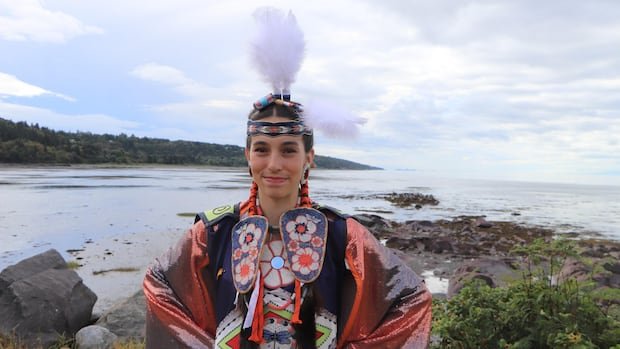
The majority of the 2,200 Wolastoqiyik Wahsipekuk individuals in Quebec, including Charlie Lavoie, have never resided on their ancestral land. The federal government allocated a small reserve of less than one hectare in 1869, situated on a striking peninsula in Cacouna, Quebec, along the Saint-Lawrence River. Each year, 17-year-old Lavoie attends the annual powwow at the Cacouna 22 reserve in August to connect with fellow Wolastoqewi from Quebec and New Brunswick, where she first embraced dancing at the age of eight as a means to reconnect with her cultural roots.
In June, Lavoie excelled at the international powwow competition in Wendake, winning in the fancy shawl category, a dance symbolizing a butterfly with expressive, sweeping movements. Despite her achievement, Lavoie values dancing as a tribute to departed individuals, especially children, emphasizing its personal significance over accolades.
The Wolastoqewi community is witnessing a resurgence in local initiatives, such as the notable beluga observatory, collaborations in the Alliance de l’énergie de l’Est windmill project, and the promotion of local cuisine. Maxime Lizotte, head chef at Maqahamok pub, has integrated traditional Wolastoqey elements into the menu, reflecting his newfound appreciation for his Wolastoqewi heritage and culinary traditions passed down through generations.
Efforts to revitalize the Wolastoqey language and culture have gained momentum, with initiatives like the Putep ‘t-awt beluga observatory attracting thousands of visitors and contributing to the community’s growing sense of pride. The observatory serves as a gateway to showcase the beluga population and the rich heritage of the Wolastoqewi nation.
The community’s cultural revival is further exemplified by projects like the new tourism center and the annual powwow, which draw attention to the deep-rooted history and traditions of the Wolastoqewi people. Allan Tremblay, a fluent Wolastoqey Latuwewakon speaker from Tobique, emphasizes the importance of preserving the language and passing it on to future generations, embodying the spirit of cultural continuity and pride within the community.
For young individuals like Lavoie, the legacy lies in sharing their cultural knowledge and talents with the next generation. As the first fancy shawl dancer in her community, Lavoie sees herself as a role model for aspiring dancers, embracing her cultural heritage with pride and determination.

