
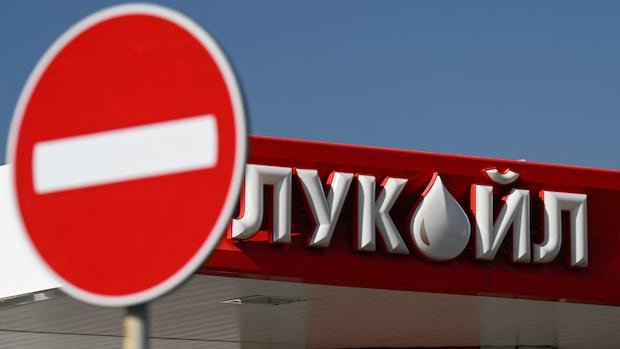
When the U.S. Treasury imposed sanctions on two major Russian oil producers, it highlighted Washington’s increasing frustration with Russian President Vladimir Putin’s refusal to agree to a 30-day ceasefire in the Ukraine conflict or participate in meaningful negotiations. The U.S. Treasury accused Lukoil and Rosneft of supporting the Kremlin’s military activities, leading to a surge in global oil prices and causing concern among Russia’s oil buyers.
These sanctions, as outlined in a media release by the U.S. Treasury, targeted Lukoil and Rosneft and over 30 of their subsidiaries. The combined daily oil exports of these two firms exceed three million barrels, according to the UK government, which had previously sanctioned both companies. Rosneft, helmed by Putin ally Igor Sechin, accounts for nearly half of Russia’s oil production, while Lukoil, a privately owned company, contributes two percent to the world’s oil output.
The potential impact of the sanctions extends beyond these companies, as the U.S. Treasury warned of targeting financial institutions and other entities doing business with them. Companies have until November 21 to conclude transactions with the sanctioned oil producers to avoid repercussions.
Following Russia’s invasion of Ukraine in 2022 and subsequent Western sanctions on its energy sector, Russia redirected more oil exports to China and India, its largest customers. However, some major buyers are now considering reducing or halting their Russian oil imports due to fears of secondary sanctions and isolation from U.S. financial markets. For instance, India’s Reliance Industries, a top Russian crude buyer, plans to scale back its imports, while Chinese state oil firms have reportedly halted seaborne oil purchases from Russia.
The Russian response to the sanctions was marked by anger and dismissal. Russian officials criticized the measures as counterproductive and predicted limited impact on the country’s finances. Despite concerns, Russia expressed confidence in its ability to weather the sanctions and adapt its supply chains. The international community, including Kuwait’s Oil Minister and EU officials, acknowledged the sanctions, with expectations of rising oil prices and potential disruptions in the energy market.
Ukraine’s President Zelenskyy welcomed the U.S. move as a signal that continued conflict and aggression by Russia would have consequences. The developments underscore the escalating tensions between Russia and the West, with implications for global energy markets and diplomatic relations.

