
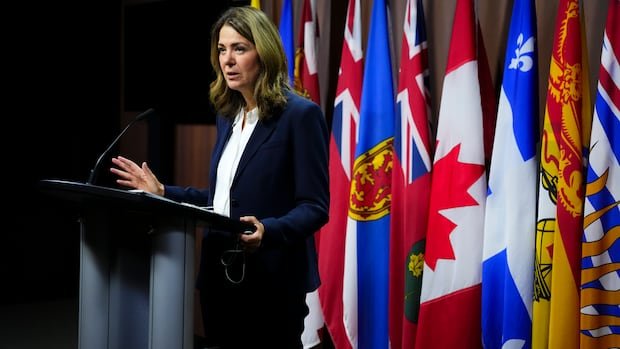
Alberta Premier Danielle Smith is considering adjustments to elements of Alberta’s industrial carbon pricing initiative, including the current industrial carbon price set by the province. The decision to maintain the freeze on the industrial carbon price at $95 per tonne until 2026 diverges from the federal government’s plan to increase its backstop price to $110 per tonne next year.
In a meeting with Prime Minister Mark Carney in Ottawa, Smith mentioned that Alberta views its pricing as a balance between industry viability and stimulating investments in green technology. She indicated that the current $95 per tonne carbon price is subject to discussion as part of ongoing program adjustments.
Federal officials have dodged questions regarding the potential imposition of the federal backstop on Alberta if its industrial carbon pricing program fails to meet federal standards. The backstop rate is designed to be enforced if provinces lag behind, although it remains uncertain if Carney will enforce the higher price, particularly given the lack of action against Saskatchewan, which eliminated its industrial carbon price earlier this year.
Carney prioritized strengthening industrial carbon pricing while removing the consumer carbon tax upon taking office. A study from the Canadian Climate Institute demonstrated that the industrial price, targeting major emitters, could significantly reduce greenhouse gas emissions compared to the consumer levy.
Alberta recently proposed changes to its industrial carbon pricing program, allowing companies to invest in their emissions reduction projects to avoid provincial fees and enabling smaller companies that fall below the emissions threshold to opt out of the carbon pricing system for 2025. Despite being praised by industry stakeholders, experts caution that these changes might deter investments in clean growth.
During a House of Commons environment committee session, the principal economist at the Canadian Climate Institute highlighted the significant uncertainty introduced by the proposed changes in Alberta’s cap-and-trade system, potentially leading to lower future prices and a subdued market for decarbonization investments.
Carbon pricing systems, such as Canada’s industrial model, set emissions caps, with companies below the cap able to generate and sell credits to those exceeding it. The effectiveness of such systems relies on the pricing of credits to incentivize emission reduction investments over credit purchases.
Smith is engaged in negotiations with Carney to facilitate the construction of a new pipeline from Alberta to the British Columbia coast, urging the federal government to lift the tanker ban, eliminate the electric vehicle sales mandate, remove the oil and gas emissions cap, and abolish the federal industrial carbon price to grant provinces regulatory autonomy.
While details of Smith and Carney’s meeting remain undisclosed, Smith emphasized the need for revisions or repeal of federal environmental policies that are deemed impractical, citing Carney’s previous actions in repealing the retail carbon tax and delaying the electric vehicle mandate implementation.
Smith has proposed a potential “grand bargain” involving the advancement of the Pathways Alliance carbon-capture project and an oil pipeline to the West Coast, aiming to submit the pipeline project for consideration by Ottawa’s Major Projects Office by next spring.
Smith aims to finalize a partnership agreement by the Grey Cup in mid-November, expressing optimism for progress in energy projects through federal collaboration.

