
A peculiar object resembling a blob of beige dough filled with metal nuts, bolts, and nails was discovered, resembling a Frankenstein fruitcake at first glance. This item, however, was identified as a traditional improvised explosive device (IED) by Ukrainian authorities, intended for placement at a military center in Kyiv. Unlike Canadian Forces who encountered similar IEDs in Afghanistan, this incident took place in Ukraine’s capital, involving a local teenager rather than the Taliban.
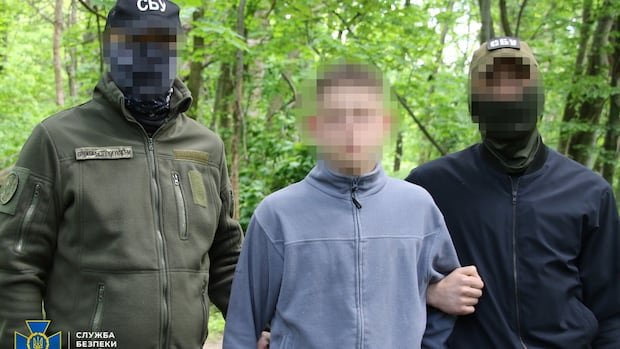
The Security Service of Ukraine (SBU) revealed that this was one of several instances where civilians recruited online were instructed by Russian agents to clandestinely plant a bomb near a military facility for remote detonation. According to Steven Rai, a digital research analyst at the Institute for Strategic Dialogue, Russia is exploiting vulnerable individuals, regardless of age or background, to carry out such attacks.
As the conflict in Ukraine is dubbed a “meat grinder,” covert operations between the Kremlin and Kyiv have escalated, resulting in incidents like IEDs in Kyiv becoming more frequent. Various tactics such as covert assassinations, railway sabotage, car bombings, and involvement of designated terrorist groups have transformed the European land war into a scenario reminiscent of the global war on terror.
In a bold move, Ukrainian special forces conducted Operation Spider’s Web, deploying kamikaze drones into Russia to target strategic assets. Simultaneously, Russian espionage activities within Ukraine have intensified, utilizing Ukrainian civilians as operatives and informants against their own nation through encrypted platforms like Telegram.
To combat this threat, the SBU initiated an educational campaign called “Burn the FSB Man,” educating citizens, especially youth, on Russian recruitment tactics and thwarting multiple IED attacks and other violent acts orchestrated by Kremlin spies. Despite these efforts, Russia’s influence persists, as seen in the involvement of groups like The Base in terrorist activities.
The ongoing conflict involves Ukraine responding with its own civilian and paramilitary saboteurs against Russian forces in occupied territories. The Rukh Oporu, a state-sponsored resistance movement, employs various tactics to disrupt Russian operations, drawing fear from Russian military personnel and escalating tensions on both sides.
The conflict extends beyond Ukraine’s borders into mainland Russia, with Ukrainian partisan groups targeting logistics railways and conducting operations within Russia itself. The vicious cycle of violence between Russian and Ukrainian forces continues, with hopes for a peaceful resolution in the future to establish a free and peaceful coexistence in the region.

