
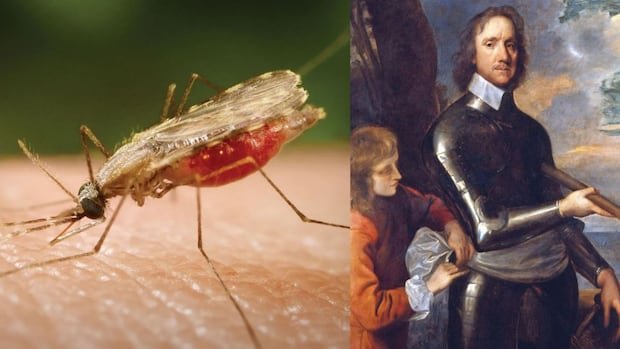
In Cork, Ireland, a city councilor is proposing the installation of a public statue dedicated to a mosquito. This particular mosquito is believed to have bitten the English invader Oliver Cromwell, supposedly leading to his demise from what was then referred to as “Cork fever,” an old term for malaria.
The proposed statue, if realized, would likely be the world’s smallest public monument, as per Green Party councilor Oliver Moran. Moran envisions the diminutive statue placed atop an empty pedestal outside Cork City Hall, among other potential locations.
Acknowledging Cromwell’s controversial legacy, Moran highlights the divisive views of the historical figure, particularly in Ireland, where Cromwell is remembered for the brutal military campaigns of the 17th century. These campaigns resulted in the deaths of hundreds of thousands in an effort to establish English dominance over the country.
Due to Cromwell’s unpopular reputation among the Irish, Moran sees honoring the mosquito that may have contributed to his demise as an intriguing and possibly appealing concept. The councilor shared the inspiration behind the idea, which stemmed from a social media conversation about Cromwell’s Irish campaign and the alleged mosquito incident.
Regarding Cromwell’s varying perceptions, Moran explains the contrasting views between Ireland and England, emphasizing the atrocities and military violence associated with the Cromwellian campaigns in Ireland.
When asked about the statue’s design, Moran indicates that it is still in the early stages of development. Suggestions for potential locations include the empty plinth outside Cork City Hall and a historical fort with Cromwellian connections in the city center.
In response to skepticism about the historical accuracy of the mosquito’s role in Cromwell’s death, Moran emphasizes the symbolic nature of the proposed statue, which aims to convey a narrative of the downfall of tyrants by seemingly insignificant forces.
By proposing this unique public art installation, Moran aims to explore the city’s natural environment and its historical significance, emphasizing the relationship between Cork’s marshland origins and its cultural identity.

