
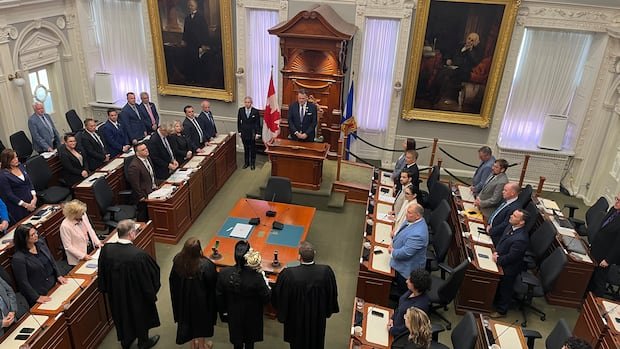
As the legislative session at Province House in Nova Scotia progressed swiftly, the leader of the Official Opposition expressed concerns about the government’s avoidance of accountability and scrutiny. In 2020, Tim Houston, the leader of the Progressive Conservatives, criticized then-Premier Stephen McNeil and his Liberal government for rushing through the budget in a 14-day sitting.
Fast forward to 2025, the fall sitting concluded in just eight days, with Premier Tim Houston praising the efficiency and productivity of his government’s approach. Despite missing two days for external commitments, Houston deemed the sitting successful. However, opposition leaders Claudia Chender of the NDP and Derek Mombourquette of the Liberals criticized the government’s haste to avoid media and opposition scrutiny.
During the recent sitting, the government, led by the PCs, introduced extended hours and passed five omnibus bills, a departure from traditional legislative practices in Nova Scotia. While omnibus bills can streamline related legislative changes, critics raised concerns about the lack of transparency and accountability in combining multiple measures into single bills.
One significant bill, known as the Protecting Nova Scotians Act (Bill 127), encompassed amendments to seven existing laws and one new legislation, addressing various areas such as social insurance number collection, bouncer regulations, and healthcare professionals’ authority to share personal health information. The inclusion of changes to the Crown Lands Act, particularly amid Mi’kmaw land protection activities, raised questions about the government’s motives.
The increased use of omnibus bills by the PCs has reduced opportunities for ministers to explain proposed changes during legislative debates, leaving reporters and the public to decipher complex legislation without adequate government input. Despite potential political advantages for Premier Houston in expediting legislative proceedings, concerns linger about the public’s understanding of government actions and intentions.
As the government continues to navigate challenges such as a growing deficit, utility rate hikes, and strained relations with First Nations leadership, the balance between efficiency and transparency remains a subject of debate. The rapid conclusion of legislative sessions may offer strategic benefits for the government in shaping public messaging, but it also raises questions about public engagement and oversight.
Overall, the recent expedited legislative process in Nova Scotia underscores the ongoing tension between swift governance and meaningful public accountability.

