
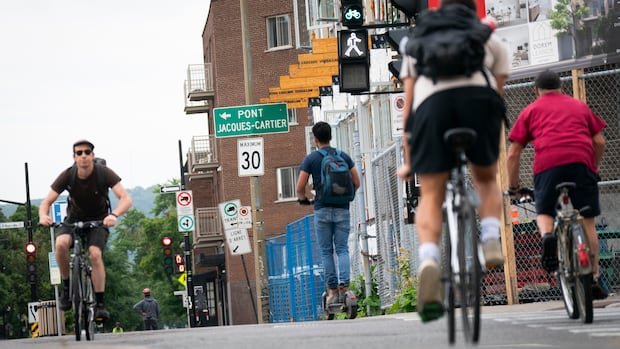
Since assuming office in 2017, Montreal Mayor Valérie Plante has overseen a 35% expansion of the city’s cycling network, adding 280 kilometers of bike paths. Currently, Montreal boasts a total of 1,082 kilometers of bike lanes. However, some residents argue that there may be an overabundance of bike lanes, with certain mayoral candidates leveraging discontent with cycling infrastructure for political gain.
As the 2025 municipal election approaches, environmental concerns are at the forefront of many voters’ minds. The dichotomy between bikes and cars is increasingly seen as outdated, leading to minimal differences in candidates’ positions on bike paths. Before delving into the campaign promises related to cycling, it’s essential to understand how bike paths impact on-street parking and businesses.
Research indicates that bike paths do encroach upon parking space in Montreal, albeit for the greater good of reducing greenhouse gas emissions and fostering healthier, more sustainable cities. Only a small fraction, 2.3%, of Montreal’s roadway is allocated to bike infrastructure, with the majority, 97.68%, reserved for cars, according to a 2025 study by McGill University. While concerns over parking shortages persist, the removal of bike lanes is unlikely to significantly alleviate traffic congestion.
Moreover, data from Eco-Counter and the City of Montreal show significant bike traffic in the city, with some intersections recording over a million bike counts annually. This demonstrates the efficiency and popularity of cycling as a mode of transportation in Montreal. Despite some opposition from businesses affected by bike path construction, studies have shown that improved bike infrastructure generally has a positive economic impact on retail and food services, albeit potentially negatively impacting car-centric businesses.
Regarding the mayoral candidates’ promises, there is a mix of commitments to expand the cycling network and calls for reassessment of existing bike paths. For instance, Ensemble Montréal Leader Soraya Martinez Ferrada aims to conduct an audit of bike paths within the first 100 days of her potential mandate. Projet Montréal Leader Luc Rabouin pledges to enhance access to Montreal’s bicycle-sharing service, while Transition Montréal Leader Craig Sauvé prioritizes public safety and health through initiatives like introducing baby seats for Bixi bikes.
With each candidate offering distinct visions for Montreal’s cycling future, the debate over bike paths remains a central issue in the upcoming election, reflecting the city’s ongoing evolution towards sustainable urban mobility.

