
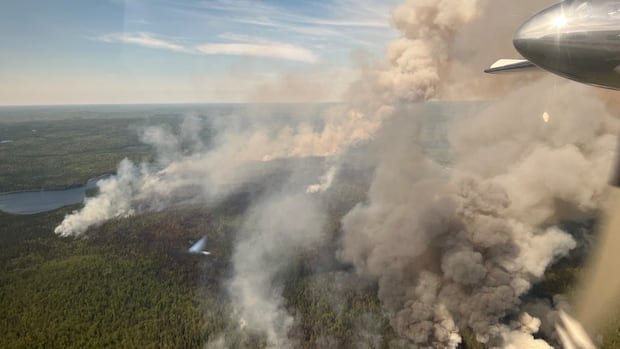
In the midst of its most severe wildfire season on record, Ontario is seeing new research from McGill University confirming the role of aspen trees as a natural fire barrier.
According to Flavie Pelletier, the lead author of the study and a PhD graduate, aspen trees have long been known anecdotally for their resilience to fire despite having thin bark that can burn rapidly.
Through an analysis of satellite imagery of Canada’s boreal forest pre and post wildfires, Pelletier and her team discovered that expansive clusters of aspen can significantly impede the spread of wildfires.
The comparison of images before and after the fires revealed a higher concentration of aspen at the edges of burnt areas.
Pelletier mentioned a couple of theories explaining how aspen patches can act as a barrier against wildfires, noting their higher moisture content in comparison to coniferous trees.
Moreover, the positioning of leaves on aspen, higher up on the trunk than coniferous tree needles, makes them less susceptible to ground fires compared to other species.
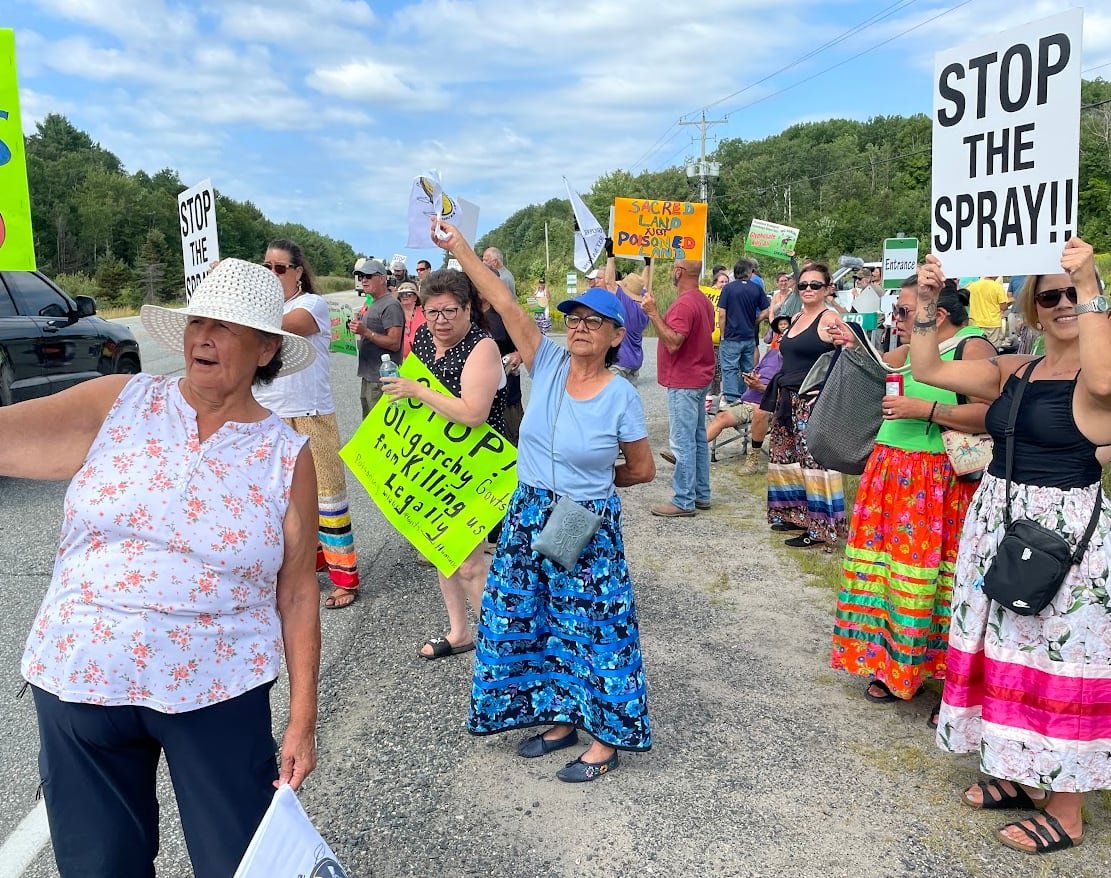
Challenges Facing Aspen
While aspen play a crucial role in mitigating wildfires, Pelletier highlighted the ongoing pressure on aspen in commercial forests.
Each summer, forestry companies in Ontario conduct extensive herbicide spraying on thousands of hectares of Crown land with glyphosate to eliminate broadleaf vegetation competing with coniferous trees earmarked for logging.
The use of glyphosate, a prevalent herbicide for this purpose, poses a long-term risk of increased fire susceptibility if aspen populations are significantly reduced, either through brushing or spraying.
Fred Pinto, a forestry adjunct professor at the University of Toronto, pointed out that although some studies indicate the return of broadleaf trees like aspen post-glyphosate spraying, this regeneration process can take several years.
Pinto clarified that only a small portion of Ontario’s boreal forest is harvested annually, and there is no definitive research indicating whether glyphosate-sprayed forests are more prone to wildfires.
Many of the ongoing fires in northern Ontario are located in remote, untouched areas of northwestern Ontario without any history of logging or glyphosate spraying.
Regarding the toxicity of wildfire smoke from glyphosate-sprayed forests, Pinto suggested that any impact would be minimal given the minute presence of glyphosate in the forest, making it nearly impossible to detect in the air.
He added that the high temperatures during wildfires would likely vaporize any residual glyphosate in the air.
<a href="https://www.cbc.ca/news/c

