
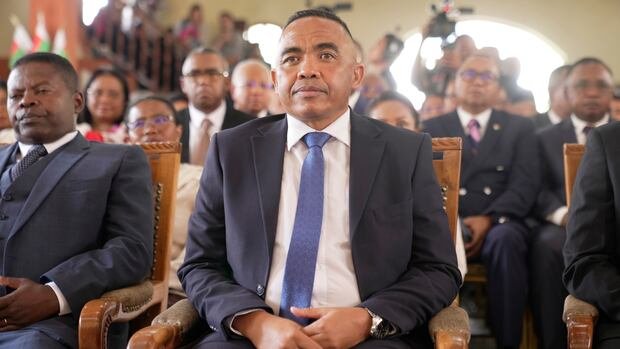
An army colonel orchestrated a swift military coup in Madagascar, taking over as the new leader in a rapid power shift that forced the previous president to flee the country and go into hiding. Col. Michael Randrianirina, the head of an elite army unit, officially became the new president after being sworn in at a ceremony in the nation’s High Constitutional Court, in the presence of nine red-robed judges.
The takeover occurred just three days after Col. Randrianirina announced that the armed forces were assuming control of the island nation in the Indian Ocean, home to approximately 30 million people. While the United Nations denounced the military seizure as an unconstitutional government change, there was limited international response, including from France, Madagascar’s former colonial ruler.
The military action, prompted by three weeks of protests primarily led by young people against the government, resulted in Madagascar’s suspension from the African Union. President Andry Rajoelina fled the country, citing safety concerns amid the soldiers’ revolt led by Randrianirina, reportedly escaping on a French military aircraft. In his absence, Rajoelina was impeached by parliament just before Col. Randrianirina declared the military’s assumption of power.
Col. Randrianirina, aged around 50 or 51, transitioned from military attire to a formal suit and tie for the inauguration ceremony attended by military officials, civilian leaders, and foreign diplomats. Having risen from relative obscurity, the colonel had a brief stint in detention two years ago for involvement in an attempted mutiny, spending most of the time at a military hospital.
Madagascar, grappling with high poverty rates affecting 75% of its population, has a history of political turmoil since gaining independence in 1960, marked by coups and unrest. GDP per capita has sharply declined over the decades, with rampant corruption contributing to the nation’s challenges, as evidenced by its drop in Transparency International’s corruption index rankings.
Col. Randrianirina announced plans for a military council to govern Madagascar under his presidency for up to two years before fresh elections, delaying the aspirations of the youth who spearheaded the revolt against Rajoelina. Rajoelina’s administration criticized the High Constitutional Court’s decision to invite Randrianirina as the new president, alleging intimidation of some judges.
Despite ongoing protests since last month, reminiscent of other youth-led movements globally, Madagascar has not experienced significant violence following the military takeover. The colonel’s troops have been met with support and jubilation by the populace. Col. Randrianirina described the military intervention as a patriotic duty to restore the nation’s former glory, combat insecurity, and address social issues.
UN Secretary-General António Guterres and the African Union have condemned the unconstitutional transfer of power, calling for a return to constitutional order and the rule of law in Madagascar.

