
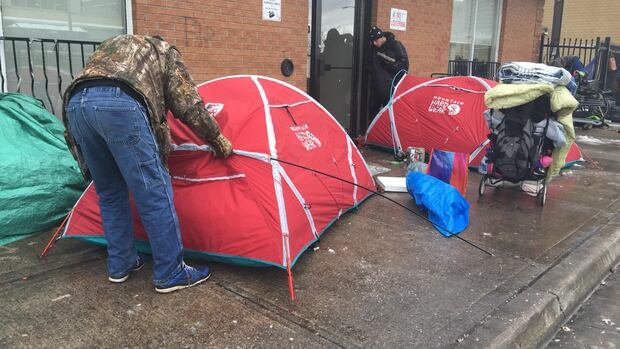
London’s endeavors and investments to tackle the city’s homelessness crisis are yielding positive results, yet additional funding from higher levels of government will be essential to support the growing homeless population.
A recent report assessing London’s homeless response plan, known as the Whole of Community System Response (WoCSR), was released on Wednesday. Conducted by a research team at Western University, the report serves as an evaluation of the city’s initiatives to aid individuals with complex health-care needs who are living without shelter.
Established in 2022, the plan has facilitated the establishment of two homeless hubs and the construction of 93 supportive housing units, with over 300 more units in the pipeline or already being built. Data presented in the report indicates that these efforts have led to positive outcomes, resulting in cost savings in various areas of the health-care system, such as a decrease in emergency department visits.
A significant indicator of improvement is the decline in preventable deaths among London’s homeless community, dropping from 55 deaths in 2022 to 44 in 2024 amid a period of rapid population expansion in the city. The reduction in mortality rates is attributed to the impact of services implemented over the past three years.
The report also outlines plans for additional hubs in London. The existing homeless hubs have accommodated over 100 clients, assisting more than 40 individuals in transitioning to stable housing. Notably, the Atlohsa Family Healing Service hub with 10 respite beds and 18 transitional rooms has facilitated the transition of 19 individuals to permanent housing. Similarly, the Youth Opportunities Unlimited hub has supported 25 young people in moving to stable housing.
Furthermore, a forthcoming hub, the Homelessness and Addiction Recovery Treatment (HART) Hub, is set to open at the Salvation Army’s Centre of Hope, offering 60 beds. The report mentions the interest expressed by seven other organizations in establishing hubs.
While acknowledging the achievements of these initiatives, the report stresses the need for urgent action. London’s homeless population has surged by 19% since 2022, surpassing 2,200 individuals who interacted with the city’s homeless response system.
London has sourced funding from various channels, with significant investments made in the homeless response. Mayor Josh Morgan commended the report for highlighting the benefits of provincial support, emphasizing the positive impact of investing in a hubs-based system to alleviate pressure on the health-care sector.
Despite the progress made, the report highlights concerning trends, including the disproportionate representation of Indigenous individuals among the homeless population and the high levels of stress and burnout faced by workers in roles serving unhoused individuals.
Presented at the council’s Community and Protective Services Committee meeting, the report underscores the effectiveness of current investments while underscoring the need for continued support to address London’s homelessness challenges.

