
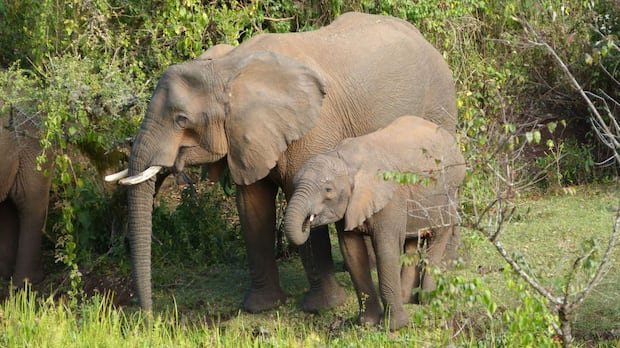
In an interview with scientist Elodie Freymann, it was revealed that African elephants in Kenya’s Mount Elgon region may use medicinal plants to treat themselves and their offspring. Stories from local wildlife scouts and community members recount instances of sick elephants consuming bark from trees and mother elephants incorporating medicinal plants into their milk for their babies.
Freymann, who specializes in studying self-medication in animals, expressed that the intelligence and complexity of elephant societies suggest a deep understanding of the diversity of medicinal plants they utilize in the wild. A recent study co-authored by Freymann, published in the journal Nature, highlights several dozen medicinal plants identified by local knowledge from the Mount Elgon elephants.
While the research underscores the sophistication of elephants and emphasizes the importance of preserving the biodiversity crucial to their well-being, scientists emphasize the need for further investigation to conclusively determine if elephants are indeed self-medicating. The study draws on insights from members of the Sabaot community who have observed elephants seeking out specific plants when unwell or feeding their young medicinal plants.
While some of the cited plants have documented pharmacological properties, skepticisms remain regarding whether the observed behaviors truly constitute intentional self-medication. Chase LaDue, an elephant ecologist not involved in the study, highlights the necessity for robust data to validate the claims of medicinal plant consumption by elephants.
The study’s reliance on local knowledge as a foundation for research is praised, yet experts caution that anecdotal evidence has its limitations and that more empirical evidence is needed to substantiate the claims. Freymann notes that elephants likely do not consume medicinal plants out of preference due to the bitter and toxic nature of some compounds present in high doses.
The research team plans to analyze footage of elephants consuming the plants to advance their investigation. If proven, elephants will join a growing list of animals, including chimpanzees and other great apes, known to exhibit self-medication behaviors. The study underscores the importance of protecting biodiversity to ensure animals have access to natural medicines essential for their survival in evolving environments.

