
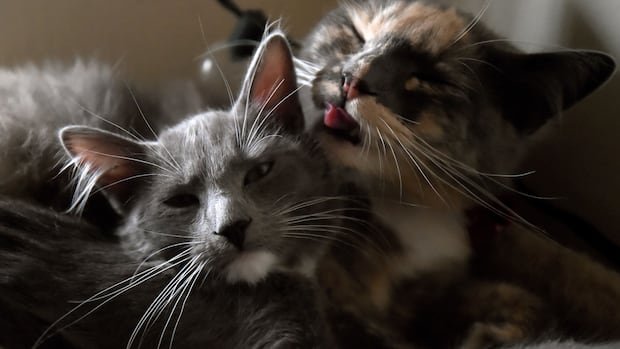
Cat behaviorist Morgane Van Belle discusses how cats use grooming to communicate various messages, as revealed by a study from Ghent University in Belgium. Allogrooming, or mutual grooming, can be both friendly and passive-aggressive, with cats using it to convey signals such as territorial disputes or desires for resources.
Inspired by observing her own cats, Van Belle conducted research analyzing videos from multiple households with cats. The study found that allogrooming can serve as a form of social bonding or as a competitive behavior. Specific cues, such as biting during grooming, asymmetrical body postures, and signs of annoyance in the groomed cat, differentiate between positive and confrontational allogrooming.
Experts like psychology professor Suzanne MacDonald and animal behaviorist Kristyn Vitale emphasize the importance of understanding cat behavior for owners to interpret their pets’ interactions accurately. Allogrooming, a common behavior among various species like primates and horses, serves different functions depending on the context.
Van Belle highlights the significance of allogrooming in resolving conflicts among cats, noting that it can prevent more aggressive fights by serving as a subtle communication tool. Despite occasional passive-aggressive interactions, cats like Fabio and Giovanni can maintain positive relationships through grooming and play sessions.

