
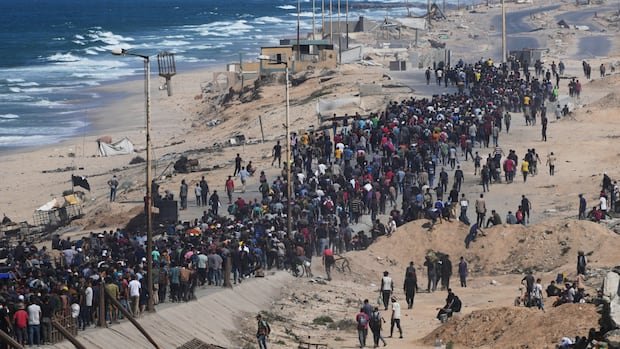
Thousands of displaced Palestinians journeyed across the desolate lands of Gaza to return to their abandoned homes after a ceasefire was enacted, leading to Israeli troops withdrawing as part of the agreement to end the conflict. A large group of people moved north on foot along the coastal road towards Gaza City, the largest urban area in the region that had recently faced heavy attacks during the war.
Ismail Zayda, a resident of Gaza City, expressed relief that his house was still standing but lamented the widespread destruction in the neighborhood. In Khan Younis, a once-thriving city now reduced to rubble, residents navigated through the remains, salvaging whatever they could, like a man carrying scrap timber for firewood.
As the ceasefire came into effect, the Israeli military announced the withdrawal of troops from urban areas, though they would maintain control over a significant portion of Gaza. The next steps outlined in U.S. President Donald Trump’s plan involve a phased approach to peace, including the establishment of an international body for post-war administration in Gaza.
Prime Minister Benjamin Netanyahu emphasized the need for Hamas disarmament before full peace could be achieved, while Hamas spokesperson Hazem Qassem highlighted the group’s commitment to defending Palestinians using legitimate means. The return of civilians to their homes marked a significant moment as rescue workers expanded their efforts to reach previously inaccessible areas in Gaza City.
The ceasefire agreement, ratified by Israel’s government, includes provisions for the release of hostages and prisoners held by both sides, signaling a step towards reconciliation. The international community, including Arab and Western nations, welcomed the deal brokered by Trump, with plans for a joint task force to support stability in Gaza without American troops directly on the ground.

