
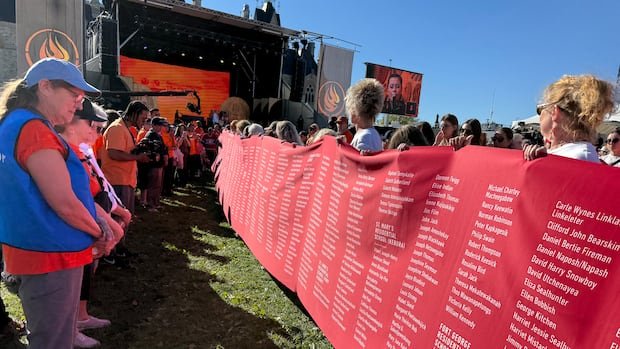
Canadians across the country are coming together to commemorate the fifth annual National Day for Truth and Reconciliation, reflecting on the somber legacy of residential schools and paying tribute to the children who never made it back home.
Governor General Mary Simon, the first Indigenous person to hold this position, acknowledged the strides made towards reconciliation while emphasizing the ongoing need for more efforts. She highlighted the progress in inclusive education and cultural revitalization among Indigenous communities but stressed the persistent disparities that demand attention, particularly in mental health support and traditional healing practices.
Simon urged Canadians to use this day as a reminder to renew their commitment to reconciliation. This year also marks a decade since the Truth and Reconciliation Commission’s final report, shedding light on the devastating impact of residential schools that operated for over a century, forcibly separating approximately 150,000 Indigenous children from their families.
The report detailed the systemic abuse and neglect within these institutions, resulting in tragic deaths and long-lasting intergenerational trauma. The TRC’s findings underscored the destructive nature of residential schools, intended to assimilate Indigenous children into mainstream Canadian society, causing irreparable harm.
The ceremony on Parliament Hill was a solemn affair, featuring speeches from Indigenous leaders like Lucien Wabanonik and Charlotte Nolin, who emphasized the collective responsibility of all Canadians in the reconciliation process. Nolin, a Métis elder and survivor, emphasized that reconciliation is a shared journey that requires active participation from every individual.
Prime Minister Mark Carney affirmed the government’s commitment to addressing the TRC’s calls to action, emphasizing that reconciliation is an ongoing, multigenerational endeavor. The event included symbolic gestures, such as the unveiling of an Indigenous painting outside the cabinet room and the display of a memorial cloth bearing the names of children lost to residential schools.
The day’s events resonated deeply with Minister Mandy Gull-Masty, who shared her personal connection as the daughter of a residential school survivor. She highlighted the importance of remembering and learning from this dark chapter in Canadian history, emphasizing the need for sustained efforts towards healing and reconciliation.
Notably, this National Day for Truth and Reconciliation marked the first observance since the passing of Murray Sinclair, the former TRC leader. His legacy was honored as advocates and leaders stressed the ongoing nature of reconciliation, urging Canadians to actively engage in the process of learning, unlearning, and doing better for future generations.

