
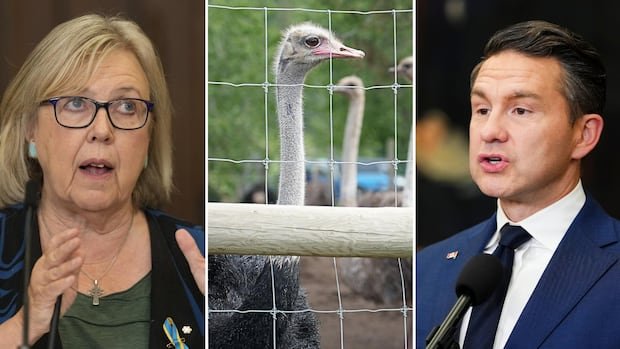
In the ongoing battle to protect its ostriches from being culled by the Canadian Food Inspection Agency (CFIA), a British Columbia farm is awaiting a decision from the Supreme Court of Canada. While this unfolds, politicians in Ottawa are treading carefully in their remarks on the matter.
Pierre Poilievre, the Conservative leader, has refrained from directly addressing the protesters at Universal Ostrich Farms who are rallying against the planned cull, instead criticizing the Liberal government for mishandling the situation. Health Minister Marjorie Michel, responsible for the CFIA, expressed concern about the farm but declined to comment further as the case is before the court.
Farm spokesperson Katie Pasitney criticized politicians for their silence on the issue, urging leaders like Poilievre to prioritize matters affecting Canadians. The farm has garnered support from Conservative MP Scott Anderson and the local MLA but feels overlooked by Ottawa, particularly by Poilievre.
Political experts note that Poilievre is navigating a delicate situation, as the ostrich farm debate echoes themes seen in recent protests like the “Freedom Convoy.” While Poilievre aims to appeal to convoy supporters without fully aligning himself with their cause, his focus remains on criticizing the Liberals on economic and crime-related issues.
Calls for re-testing the ostriches have been made by Green Party leader Elizabeth May, who emphasized the need for factual clarity before any culling decisions. The CFIA’s stance is that a cull is necessary once avian flu is detected to prevent its spread and comply with international trade agreements.
Legal battles have ensued over the CFIA’s culling order, with the agency taking control of the farm pending the Supreme Court’s decision on the latest legal challenge. The CFIA’s swift culling protocol contrasts with the prolonged legal delays and political lobbying efforts by the ostrich farm, leading to an extended period of uncertainty over the fate of the birds.

