
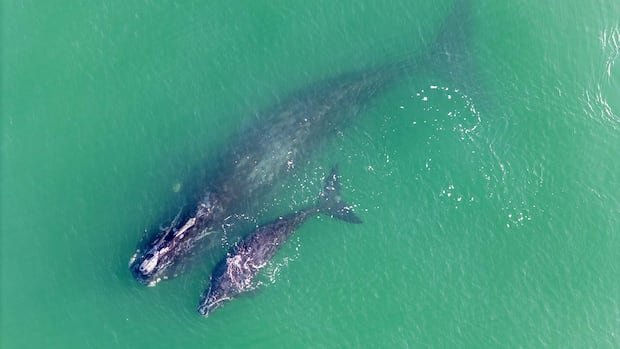
North Atlantic right whale researchers on both sides of the border express cautious optimism following a rise in the number of new whale calves born this year. A total of 23 calves were welcomed during the calving season from November to April off the southeastern U.S., marking the highest count since 2009.
Amy Warren, a scientific program officer at the New England Aquarium’s Anderson Cabot Center for Ocean Life, remarked on the significance of the 23 new calves as a positive development. However, she emphasized the importance of their survival into adulthood to contribute to the endangered whale population, which currently stands at only 380 individuals.
The reasons behind the increase in calf births this year remain uncertain, although factors such as the mothers’ health play a crucial role. The availability of food sources, impacted by climate change pushing their plankton food farther north, affects the well-being of North Atlantic right whales. Furthermore, human-induced stressors like ocean noise, ship traffic, and fishing gear entanglements pose additional threats to the whales’ health.
Conservation efforts in Canadian and U.S. waters, including fishery closures and vessel speed restrictions, have been implemented to safeguard the whales. Researchers note that not only did the whales produce more calves this year, but some mothers also had shorter intervals between giving birth, indicating potential improvements in their reproductive health.
Despite the positive news of the baby boom, researchers stress the need for sustained efforts to reverse the population decline. Delphine Durette-Morin from the Canadian Whale Institute highlights the importance of continued conservation measures to support the recovery of the species. The whales have been observed moving northward, with sightings in the Gulf of St. Lawrence this year, signaling potential shifts in their habitat.
While the increase in calf births is encouraging, a sustained effort would be required to address the species’ population decline effectively. Researchers remain hopeful for the future of North Atlantic right whales, underscoring the significance of ongoing conservation initiatives to ensure their long-term survival.

