
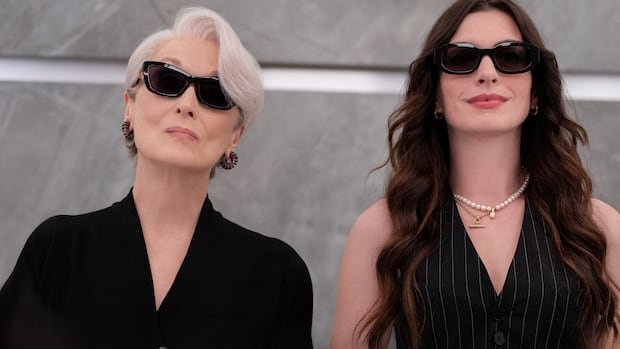
Midway through the sequel to “The Devil Wears Prada,” Meryl Streep’s character, Miranda Priestly, finds herself in a situation that would have been unthinkable two decades ago in the fashion-centric franchise’s first installment. She is on the receiving end of a lecture.
In this new chapter, titled “The Devil Wears Prada 2,” set to debut in theaters this Friday, the narrative unfolds with a theme highlighting the struggles faced by the once-prestigious Runway magazine. The decline of journalism, shifting attitudes towards influencers, and the magazine’s diminishing relevance are recurrent themes throughout the film.
Priestly is confronted by Benji Barnes, a tech entrepreneur portrayed by Justin Theroux, who foresees a future where Runway operates without the need for human input, relying solely on artificial intelligence to produce content. Barnes’ techno-utopian vision is bleak, likening the impending changes to a catastrophic event akin to the destruction of Pompeii.
Despite the departure from the original film’s opulence and glamour, the sequel retains its charm as a lighthearted tale centered around the fashion industry, albeit with a less defined focus and impact. The storyline follows Anne Hathaway’s character, Andy Sachs, now an established journalist facing professional setbacks and returning to Runway for a less-than-ideal job.
The film also reintroduces Stanley Tucci as Nigel, the magazine’s art director, who reminisces about the magazine’s former glory in an era of lavish expenses and international trips. Emily Blunt’s character, Emily, shines as she navigates her new role as a Dior executive while managing the demands of her former boss, Miranda.
The narrative unfolds with Miranda’s reputation tarnished by a scandal exposed by an external publication, leading to the recruitment of Andy to restore Runway’s credibility. The sequel is peppered with nods to the original film, catering to fans with nostalgic references and familiar faces.
Although the sequel offers drama, polished aesthetics, and a sense of familiarity, it falls short of capturing the essence of its predecessor. The character developments from the first film are somewhat disregarded, resulting in a narrative that lacks depth and introspection. Streep’s portrayal of Miranda remains formidable but lacks the nuanced exploration of her personal struggles seen in the original.
The thematic exploration of fashion’s societal impact is diluted in the sequel, overshadowed by a disjointed narrative that struggles to convey a cohesive message. Despite its entertainment value and stylish presentation, “The Devil Wears Prada 2” fails to match the original’s enduring appeal and cultural commentary, leaving audiences with a film that, while visually appealing, lacks the substance of its predecessor.

