
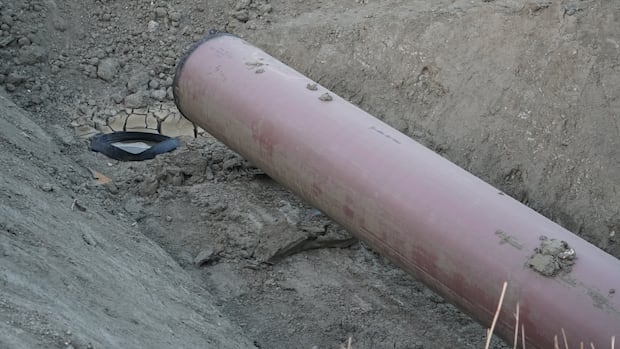

Following months of Premier Danielle Smith’s promises to secure a company for a new oil export pipeline, the Alberta government is moving forward on its own.
Consequently, Smith becomes the third consecutive Alberta premier to allocate taxpayer funds in an effort to boost oil exports from the province.
This initiative is already receiving mixed reactions from the oil industry, which seeks a new pipeline but remains wary of governmental involvement.
Numerous obstacles lie ahead for the proposal, including current federal regulations, the approval process, and whether sufficient oil producers are prepared to commit to using a new pipeline long-term.
On Wednesday, Smith announced that the provincial government will introduce its own project, aided by an advisory committee featuring pipeline companies such as South Bow, Enbridge, and Trans Mountain.
At this stage, Smith is pledging $14 million to develop and submit the proposal to the federal Major Projects Office in the spring, which will involve determining a potential route to the West Coast and estimating costs.
Currently, the provincial government does not intend to construct or manage the new pipeline itself.
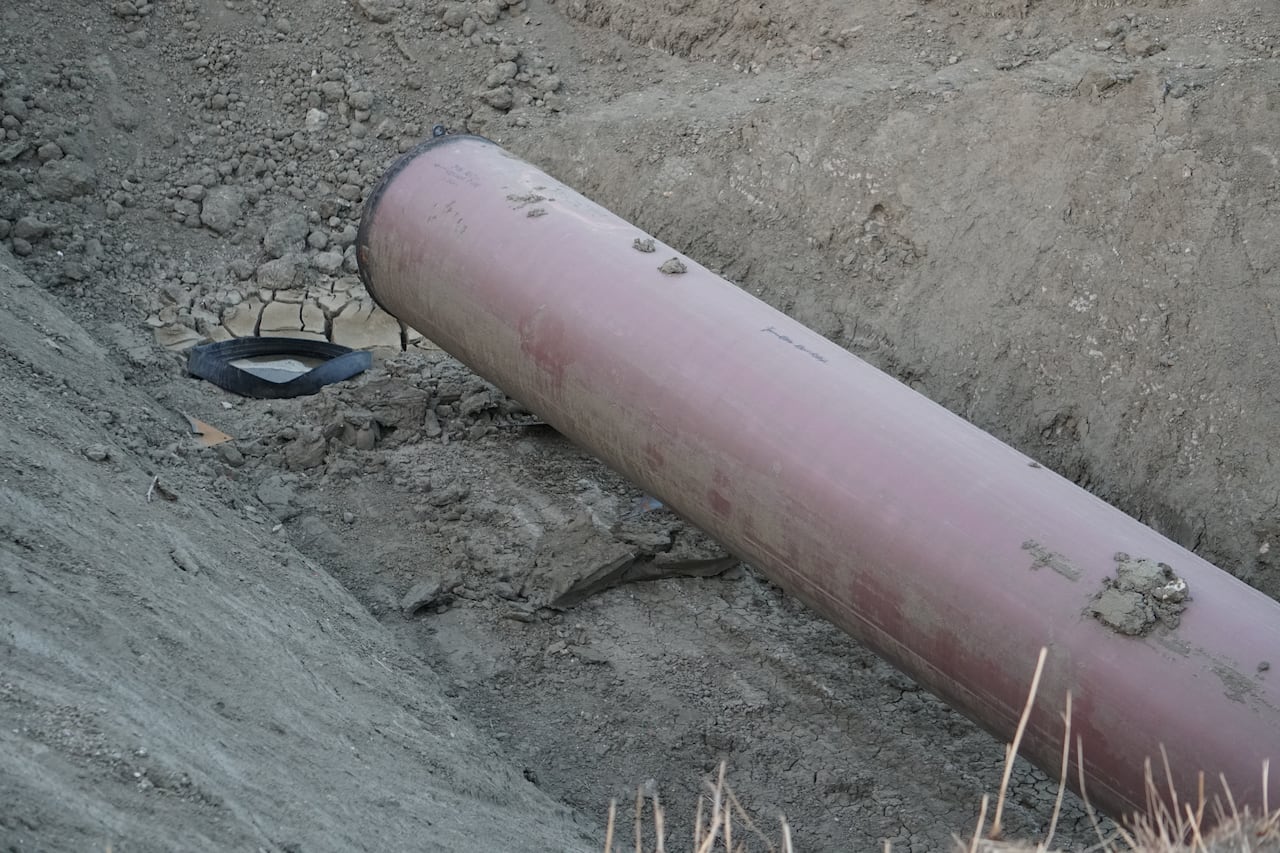
The failure of the Keystone XL pipeline cost the Alberta government about $1.3 billion. (Kyle Bakx/CBC)
“It’s a bold and aggressive move that is essential for propelling the economy forward,” remarked Robert Cooper from Calgary-based investment firm Acumen Capital Partners.
Cooper noted that pipeline companies are hesitant to risk their investments on a new project due to detrimental federal policies implemented over the past decade, including limits on oil emissions and restrictions on tanker traffic along segments of the British Columbia coast.
“While there may be advocates willing to proceed, the federal government has effectively rendered it unfeasible,” he stated.
Rafi Tahmazian, a former energy portfolio manager with Canoe Financial, believes Smith should be commended for championing the industry. However, he expresses doubts about direct government participation in the sector, drawing parallels to the federal government’s acquisition of the Trans Mountain expansion in 2018 to secure the construction of the pipeline.
“If the province must be involved, it would be regrettable. The government has no role in constructing or running pipelines,” Tahmazian emphasized.
Capacity Concerns
Presently, there is available capacity on export pipelines following the completion of the Trans Mountain expansion last year, yet forecasts indicate these lines will reach their limits by 2030 as oil production in Alberta continues to grow.
“We’re all trying to figure out how to manage capacity once Trans Mountain is at full capacity,” stated Brian Schmidt, CEO of Tamarack Valley Energy, a mid-sized oil producer, prior to Wednesday’s announcement.
Prime Minister Mark Carney has expressed a desire to see a new oil export pipeline developed, yet this year, no major pipeline companies have initiated such a project. The Major Projects Office aims to facilitate the regulatory process.
Companies are reluctant to embark on a new export pipeline due to the associated costs, complexities, and the history of unsuccessful and problematic projects in recent decades.
Developing and constructing an export pipeline could potentially require tens of billions of dollars and take up to a decade to complete.

In 2018, the Alberta government announced plans to lease rail cars to aid the industry in exporting more oil. (Dave Rae/CBC)
Smith’s pipeline initiative will encounter similar challenges as “advancing a pipeline is inherently difficult,” noted Deborah Yedlin, president of the Calgary Chamber of Commerce.
“Private investment will not be risked until the government mitigates these projects’ risks,” she added.
Historical Alberta Investments
In 2018, former Premier Rachel Notley revealed plans to procure thousands of railcars for transporting the province’s oil to market, eventually signing contracts with rail companies for the leased railcars.
Two years later, former Premier Jason Kenney terminated those contracts, incurring a loss of $1.3 billion, though he stated that the overall amount was reduced by an additional $500 million.
Kenney had different intentions.
In the same year, the Alberta government invested approximately $1.5 billion as equity in the infamous Keystone XL pipeline, along with billions more in loan guarantees to facilitate the project. The pipeline aimed to transport oil from Hardisty, Alberta, to Nebraska.
That investment was wasted when the Biden administration in the U.S. revoked the project’s permit on its first day in office.
The total cost to Albertans for Keystone XL is expected to be around $1.3 billion, although the province is still working to recover this amount.
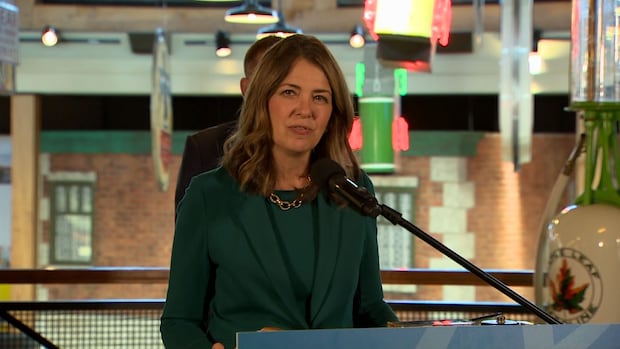
Alberta Premier Danielle Smith makes an announcement on energy infrastructure.
Challenges Ahead
At this point, Smith is only committing a small portion of the required investment. Nevertheless, the Alberta government may need to increase its initial $14 million investment due to the complexities involved in pipeline development.
“That amount is insufficient for applying for regulatory approvals or conducting a comprehensive study,” stated Steven Paget, an assistant professor at the University of Calgary’s Haskayne School of Business and a former pipeline analyst with Calgary-based investment bank FirstEnergy Capital.
“To reach the stage of laying down pipeline, even without any equipment purchases yet, you’re looking at hundreds of millions,” Paget added.
“This is a strategic move on her part,” remarked Dennis McConaghy, a former executive with TransCanada Corp — now TC Energy.
-
Imperial Oil to cut 900 jobs, will mostly leave Calgary
-
Alberta’s oilsands to hit record production high in 2025
He believes the announcement indicates Smith’s dedication to advancing the development of a new pipeline. However, it remains uncertain whether major oil producers will back Smith’s initiative by signing long-term contracts for usage of this proposed pipeline.
“Is she able to gather enough support to lend genuine weight and credibility to this approach?” he questioned.
Additional hurdles include opposition from communities and political figures.
British Columbia Premier David Eby stated that the federal government should focus on other proposed projects that are ready to go.
“Premier Smith is pushing forward a project that is completely funded by taxpayers, lacks a private sector backer, is not a viable initiative, and is deeply concerning for British Columbians,” he remarked on Wednesday.
