

With a shift in the government of Newfoundland and Labrador, uncertainty looms over the province’s significant yet tentative hydroelectric agreement with Quebec.
This provisional arrangement, referred to as the Churchill Falls MOU, is intended to supersede the 1969 agreement, which has been widely regarded as disadvantageous to Newfoundland and Labrador.
The MOU, signed in December, details various new hydroelectric initiatives, including the long-anticipated Gull Island project, which is aimed for commissioning in 2035.
Additionally, Newfoundland and Labrador Hydro, along with Hydro-Québec, proposed the construction of a second facility at Churchill Falls while increasing output at the current Churchill Falls site.
On Tuesday evening, Tony Wakeham and the Progressive Conservative party achieved a majority government, ending a decade of Liberal governance in the province.
In light of this change, they are now expressing skepticism regarding the hydroelectric agreement.
The premier-designate has committed to not advancing any agreement concerning the Churchill River without the approval of the electorate through a referendum.
“We will develop Churchill Falls. We will develop Gull Island. We will electrify Labrador. We will harness our resources, with our workforce, for the benefit of our communities,” Wakeham declared in his victory address.
“The time of a rubber-stamp government has ended. When it comes to our province’s resources, we will take charge.”
Wakeham emphasized the necessity for a “genuine independent review” of the agreement, promising to share its findings with the public.
“Should this agreement require modifications or renegotiation, we will pursue it,” Wakeham stated.
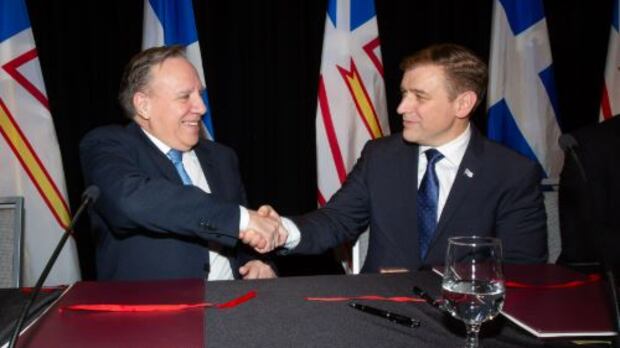
There was applause, hugs and almost too many politicians to count in St. John’s Thursday, when the premiers of Quebec and Newfoundland and Labrador announced a memorandum of understanding to end the notorious Churchill Falls agreement 17 years early. A new deal, if sanctioned, scores of billions of dollars flow in N.L. coffers for decades to come. The CBC’s Terry Roberts explains.
Legault congratulates Wakeham, says deal is a good one
Quebec Premier François Legault reaffirmed his endorsement of the agreement on Wednesday morning.
In a message of congratulations shared on X, Legault stated that the deal is “advantageous for both Newfoundland and Labrador as well as Quebec.”
“Please be assured that we are fully committed to maintaining our partnership with Newfoundland and Labrador,” Legault wrote on Wednesday morning.
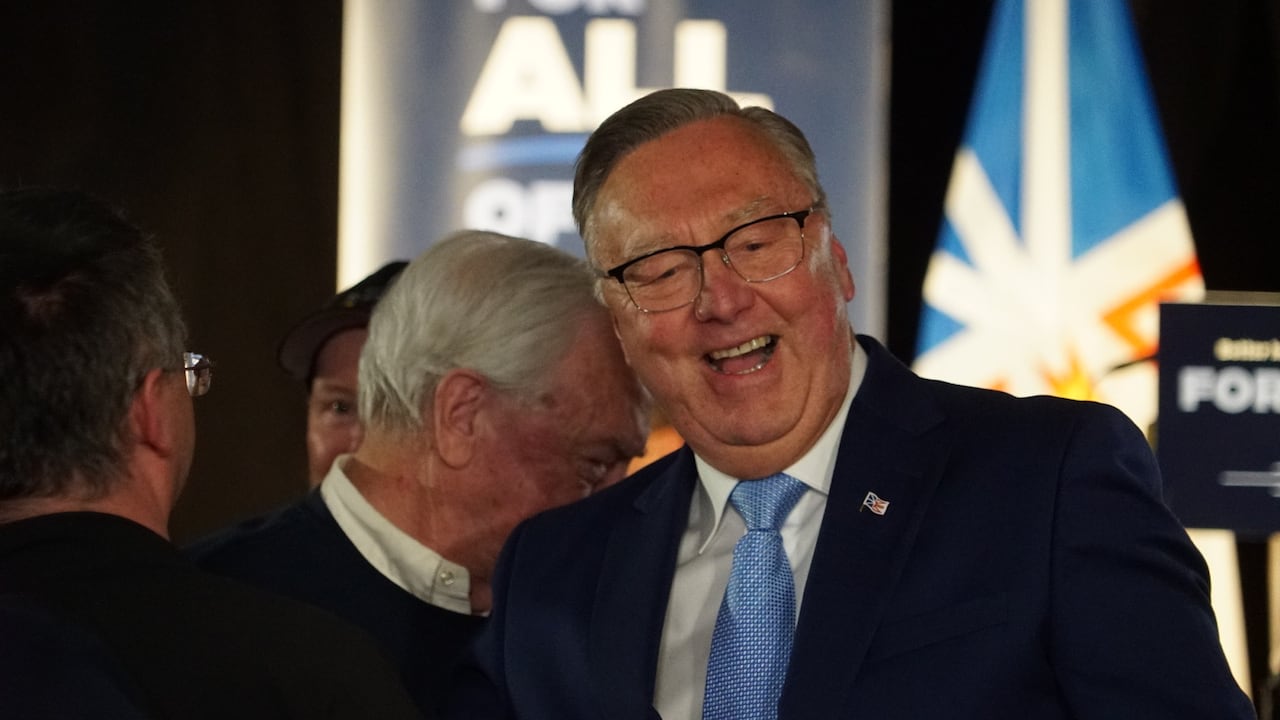
Premier-designate Tony Wakeham celebrates a majority win for the Progressive Conservatives. (Maddie Ryan/CBC)
Hydro-Québec also expressed a similar view in a statement to Radio-Canada.
“We are confident that the existing agreement is equitable and advantageous for both parties,” Hydro-Québec noted while congratulating Wakeham on his electoral success.
“We have made substantial advancements in recent months toward finalizing a detailed agreement and are dedicated to ongoing discussions with our partner [Newfoundland and Labrador Hydro].”
The MOU is anticipated to generate over $200 billion for both provinces in the next five decades.
Legault is concluding the last year of his second term as Quebec’s premier, with the next provincial election set for October 5, 2026.
