
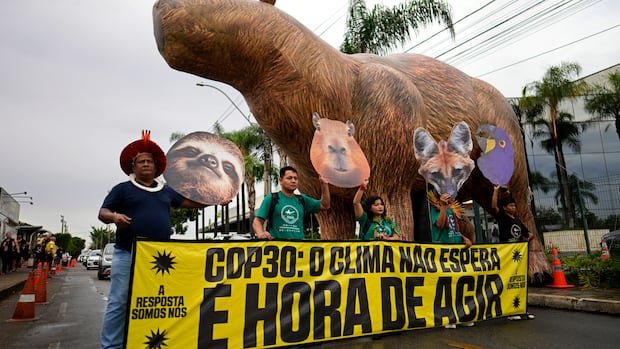
All nations worldwide were tasked this year with presenting upgraded strategies to combat climate change. However, a recent report from the United Nations reveals that these plans have had minimal impact on curbing the Earth’s future warming. The withdrawal of the United States from the initiative has also hindered progress, as highlighted in the report.
The latest climate action blueprints, required every five years under the 2015 Paris Agreement, are estimated to reduce future warming by about 0.3 degrees Celsius compared to previous projections. Only a third of the countries that are party to the agreement, representing 63% of global emissions, have submitted revised climate plans.
Canada submitted its updated strategy in February, which has been rated as “highly insufficient” by the non-profit organization Climate Action Tracker. Despite setting targets for emissions reduction, Canada’s forecast falls short of its goals, prompting calls for a coordinated policy realignment towards achieving a net-zero energy system.
Experts like Ross Linden-Fraser from the Canadian Climate Institute acknowledge Canada’s progress in target setting but emphasize the need for consistent implementation. The upcoming federal budget is expected to demonstrate a commitment to fulfilling these climate commitments.
In contrast, the Trump administration’s policies in the United States, including the rollback of environmental regulations and hindering green energy initiatives, are projected to contribute to an additional 0.1-degree Celsius of warming, according to the UN Environment Program’s Emissions Gap report.
The release of greenhouse gases, primarily carbon dioxide from burning fossil fuels, drives global temperature increases. To limit warming to the internationally agreed-upon goal of 1.5 degrees Celsius, countries must outline detailed plans for reducing emissions within the next decade. However, current policies are steering the planet towards a 2.8-degree Celsius warming trajectory, underscoring the urgency of the upcoming UN climate discussions in Belem, Brazil.
Efforts to swiftly reduce emissions from fossil fuels are crucial, but even with significant cuts, temperatures are likely to rise by at least 1.7 degrees Celsius this century. The world has made progress since the Paris Agreement, but a faster pace of action is imperative, according to UNEP executive director Inger Andersen.
The exit of the United States from the Paris Agreement alters the global emissions landscape significantly. The rest of the world must now make additional efforts to offset the rise in American carbon emissions, aiming to reduce global greenhouse gas emissions from 57.7 billion to about 33 billion tonnes annually to align with climate goals.
Although the current situation may seem challenging, experts like Climate Analytics CEO Bill Hare and Rachel Cleetus from the Union of Concerned Scientists emphasize the importance of political will and decisive action by world leaders to address the climate crisis effectively. The upcoming UN climate talks are seen as a pivotal moment for global climate action.

