
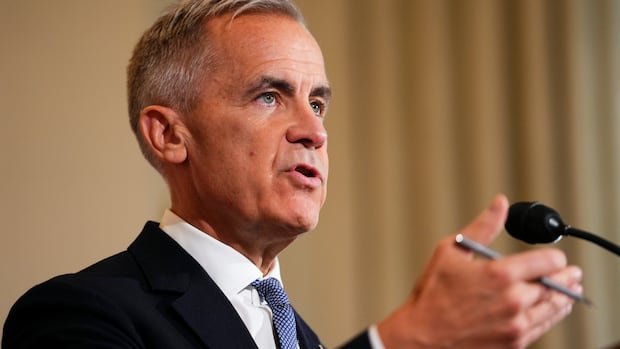
Prime Minister Mark Carney, known for his admiration of Quebec musicians Coeur de Pirate and Rock et Belles Oreilles during the recent federal election campaign, emphasized the importance of French in Canadian identity. However, a Radio-Canada analysis reveals that since his election, French has played a less prominent role in his speeches.
Examining 59 speeches and news conferences by Carney from April 29 to September 14, Radio-Canada found that only about 17% of his speaking time was in French, with a lower percentage during international events. This contrasts with previous prime ministers who demonstrated a stronger commitment to bilingualism.
Official Languages Commissioner Raymond Théberge emphasized the significance of the prime minister being equally fluent in both languages as a reflection of Canadian identity and linguistic equality. Théberge stressed the importance of addressing the population in French and English to uphold these values.
While Prime Minister Carney’s team prepares his speeches meticulously, the limited use of French in his public addresses has drawn criticism from various quarters. Former prime ministers, such as Stephen Harper, demonstrated a more balanced approach to bilingualism in their speeches.
Opposition Leader Pierre Poilievre and Bloc Québécois House leader Christine Normandin have both expressed concerns over the proportion of French used by Carney. Poilievre underscored the need for equality between the official languages, especially in a diverse country like Canada.
Defending Carney, Minister of Official Languages Steven Guilbeault highlighted the prime minister’s efforts to improve his French proficiency. Guilbeault mentioned Carney’s interactions in French and his team’s composition as indicators of a commitment to bilingualism.
Experts emphasize the importance of the prime minister setting an example by prioritizing bilingualism, particularly given the concerns of French-speaking communities outside Quebec. They emphasize the need for both French and English to be treated equally in official communications to reflect Canada’s bilingual nature.
Looking ahead, the public’s perception of Carney’s bilingualism could become a significant factor, especially among francophone voters. While current focus remains on other issues like the economy, the prime minister’s language choices may impact his government’s credibility in the long run.

