
Shae Denny expressed astonishment at the global recognition of local conservation efforts in Cape Breton. Denny, an aquatic programs manager at the Unama’ki Institute of Natural Resources, emphasized the significance of this acknowledgment for the Mi’kmaw community, as they have been stewards of the land for generations.
The United Nations recently honored a collaborative initiative involving scientists, Indigenous groups, and volunteers that focused on restoring the Atlantic salmon population in Cape Breton Highlands National Park over seven years. This initiative, known as Respectful Returns, is a joint project between Parks Canada, Indigenous communities, and local groups aimed at revitalizing rivers and streams across the country.
Since its launch in 2010, Respectful Returns has successfully restored over 65,000 hectares of land and 228 kilometers of waterways in seven national parks. The Mi’kmaq community, including Denny from Eskasoni First Nation, played a crucial role in recognizing the decline in salmon stocks in Cape Breton back in the 1950s. This led to the establishment of a salmon advisory committee to address the issue effectively.
In 2019, efforts to restore the salmon population in Cape Breton Highlands National Park commenced after years of significant declines. Park ecologist Sarah Penney highlighted the drastic drop in adult salmon returning from the ocean migration over the decades. To counter this trend, Parks Canada and partner organizations began capturing juvenile salmon annually from the Chéticamp River and Clyburn Brook, raising them in captivity before releasing them back into the wild.
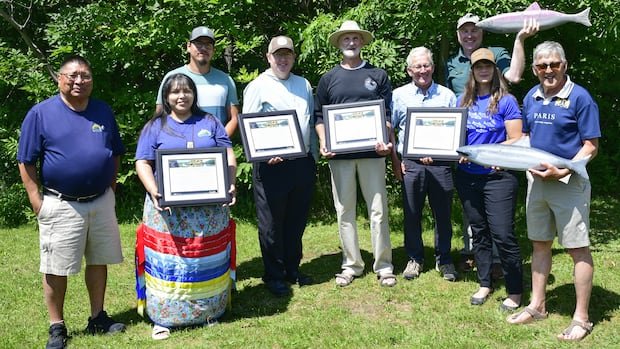
The intervention proved successful, with the salmon population meeting the conservation target of 75 spawning individuals for the first time in 30 years. Parks Canada recently received the World Restoration Flagship recognition, but they also acknowledged and awarded key partners, including the Unama’ki Institute of Natural Resources, the Atlantic Salmon Federation, and local salmon associations.
Bill Haley, vice-president of the Margaree Salmon Association, highlighted the importance of partnerships in achieving this milestone. Being recognized alongside global conservation initiatives signifies a significant achievement for the local groups involved in the restoration project in Cape Breton.

