
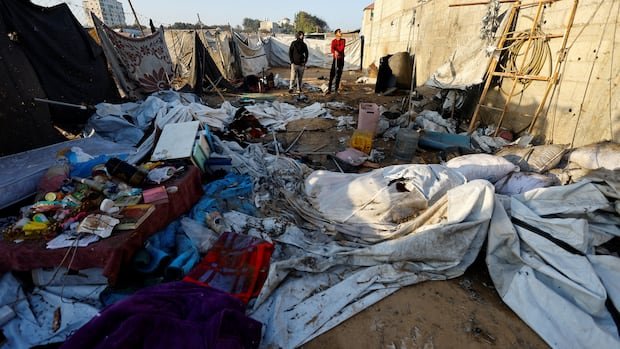
U.S. representatives held discussions with Israeli Prime Minister Benjamin Netanyahu on Monday with the aim of bringing Israel and Hamas together to restore the Gaza ceasefire plan. The recent surge in violence over the weekend, resulting in 45 reported deaths in Gaza, had jeopardized the fragile truce established a week ago.
Despite both Israel and Hamas reaffirming their commitment to the ceasefire endorsed by U.S. President Donald Trump following the recent clashes, the sustainability of the agreement remains uncertain. Issues such as Hamas disarmament, further Israeli troop withdrawals, and the future governance of Gaza pose significant challenges to achieving a lasting peace after years of conflict.
President Trump emphasized ongoing efforts to uphold the ceasefire, expressing readiness to address the Hamas situation swiftly. However, he clarified that he did not instruct Israel to take direct action and ruled out the involvement of U.S. troops on the ground.
The U.S. envoys, including Steve Witkoff and Jared Kushner, commenced their visit to shore up the current ceasefire and initiate discussions on the complex subsequent phases of the 20-step plan. Additionally, U.S. Vice-President JD Vance is scheduled to visit Israel to engage in talks about regional challenges and opportunities.
The high-level diplomatic engagements in the region, including discussions with Hamas in Egypt, underscore the critical importance of solidifying the ceasefire for President Trump. The recent events underline the hurdles in preserving the ceasefire and underline the urgent need to establish a durable peace in the region.
Gaza’s Health Ministry reported a total of 80 fatalities and 303 injuries since the ceasefire deal came into effect on October 11. The escalating tensions have heightened concerns among the residents of Gaza, who fear a resurgence of violence despite the ceasefire agreements.
Efforts continue to retrieve the remaining hostages’ bodies, with Hamas returning one hostage’s body to Israel through the Red Cross. However, challenges remain in recovering the bodies of the remaining hostages due to the destruction in Gaza.
While Israel is maintaining aid convoys to Gaza, the Rafah border crossing between Gaza and Egypt remains closed for the movement of individuals. Egypt is set to host talks with Hamas officials to discuss the implementation of the ceasefire and explore ways to address the humanitarian crisis in Gaza.
The future governance of Gaza remains a contentious issue, with disagreements over the role of Hamas in the region. The resistance from Hamas and allied factions to foreign administration, as proposed in the Trump plan, adds complexity to the peace negotiations.
Amid the uncertainty surrounding the ceasefire, Gaza residents express fears of further violence and instability in the region, underscoring the fragile nature of the current peace agreement.

