
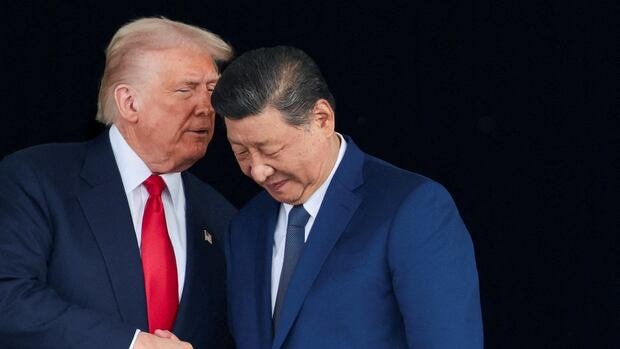
U.S. President Donald Trump announced on Thursday that he had reached an agreement with President Xi Jinping to reduce tariffs on Chinese imports in exchange for China’s crackdown on the illicit fentanyl trade, resuming U.S. soybean purchases, and maintaining rare earths exports. The meeting between Trump and Xi in Busan, South Korea, marked the conclusion of Trump’s Asia tour, during which he highlighted trade advancements with South Korea, Japan, and Southeast Asian countries.
Expressing satisfaction with the meeting, Trump rated the talks as “12 out of 10” and revealed that tariffs on Chinese imports would be lowered from 57 percent to 47 percent by halving the tariffs related to fentanyl precursor drugs from 20 percent to 10 percent. Trump emphasized that Xi committed to intensifying efforts to halt the flow of fentanyl, a potent opioid responsible for numerous overdose deaths in the U.S.
While Trump praised the tariff reduction, India and Brazil remain the only major U.S. trading partners subject to higher tariff rates. Xi emphasized the need for further cooperation in his statements following the meeting, with China’s Commerce Ministry announcing a one-year suspension of certain countermeasures.
World stock markets had surged ahead of the meeting in anticipation of progress in resolving the trade conflict between the two largest economies. However, concerns arose about the sustainability of the truce, as past negotiations had shown promising beginnings followed by setbacks.
The talks, held on the sidelines of the Asia-Pacific Economic Cooperation (APEC) summit, lasted nearly two hours. Trump and Xi discussed various concerns, with Trump mentioning that China would start purchasing significant quantities of U.S. soybeans and other agricultural products immediately.
China had also requested a relaxation of U.S. export controls on sensitive technology and a rollback of new U.S. port fees on Chinese vessels. Trump did not comment on U.S. concessions but highlighted China’s commitment to buying U.S. soybeans and farm products.
In the lead-up to the summit, China had made its first soybean purchases from the U.S. in several months. Previous trade agreements, responsible for reducing U.S. retaliatory tariffs and resuming rare earth magnet exports from China, are set to expire soon. Trump confirmed that China would not impose controls on rare earths, crucial minerals used in various industries.
During his trip, Trump signed agreements with Japan and Southeast Asian nations to diversify rare earth supplies, aiming to lessen China’s dominance in that sector. The leaders did not discuss Nvidia’s advanced Blackwell artificial intelligence chip, and U.S. Treasury Secretary Scott Bessent revealed that China had agreed to buy large quantities of American soybeans over the next few years.
Overall, the meeting between Trump and Xi showcased progress in trade discussions, with both leaders expressing optimism about the future of U.S.-China relations.

