
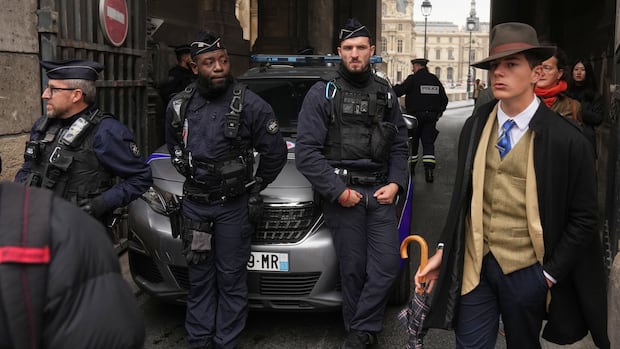
When 15-year-old Pedro Elias Garzon Delvaux discovered that an Associated Press photograph capturing him at the Louvre during the crown jewels robbery had garnered millions of views, his immediate reaction was not to rush online to reveal his identity.
In fact, it was quite the contrary.
A fan of detectives like Sherlock Holmes and Hercule Poirot, Pedro, who lives with his parents and grandfather in Rambouillet, located to the west of Paris, chose to embrace the surrounding mystery.
As speculations circulated about the elegantly dressed figure in the “Fedora Man” image — whether he was a detective, an insider, or even an AI creation — he opted to remain quiet and observe.
“I didn’t want to reveal immediately that I was the one in the photo,” he stated. “There’s a mystery surrounding this image, so it’s important to let it unfold.”
-
French auditor’s report raps Louvre for excessive art acquisitions even as most rooms lacked cameras
For his first in-person interview since the photo made him an international sensation, he appeared for the AP cameras at his residence dressed similarly to that Sunday: wearing a fedora, a borrowed Yves Saint Laurent waistcoat from his father, a jacket selected by his mother, a neat tie, Tommy Hilfiger trousers, and a restored Russian watch that has seen better days.
The fedora, tilted just right, is a tribute to Jean Moulin, a hero of the French resistance.
In person, he comes across as a cheerful and witty teenager who inadvertently found himself at the center of a global narrative.
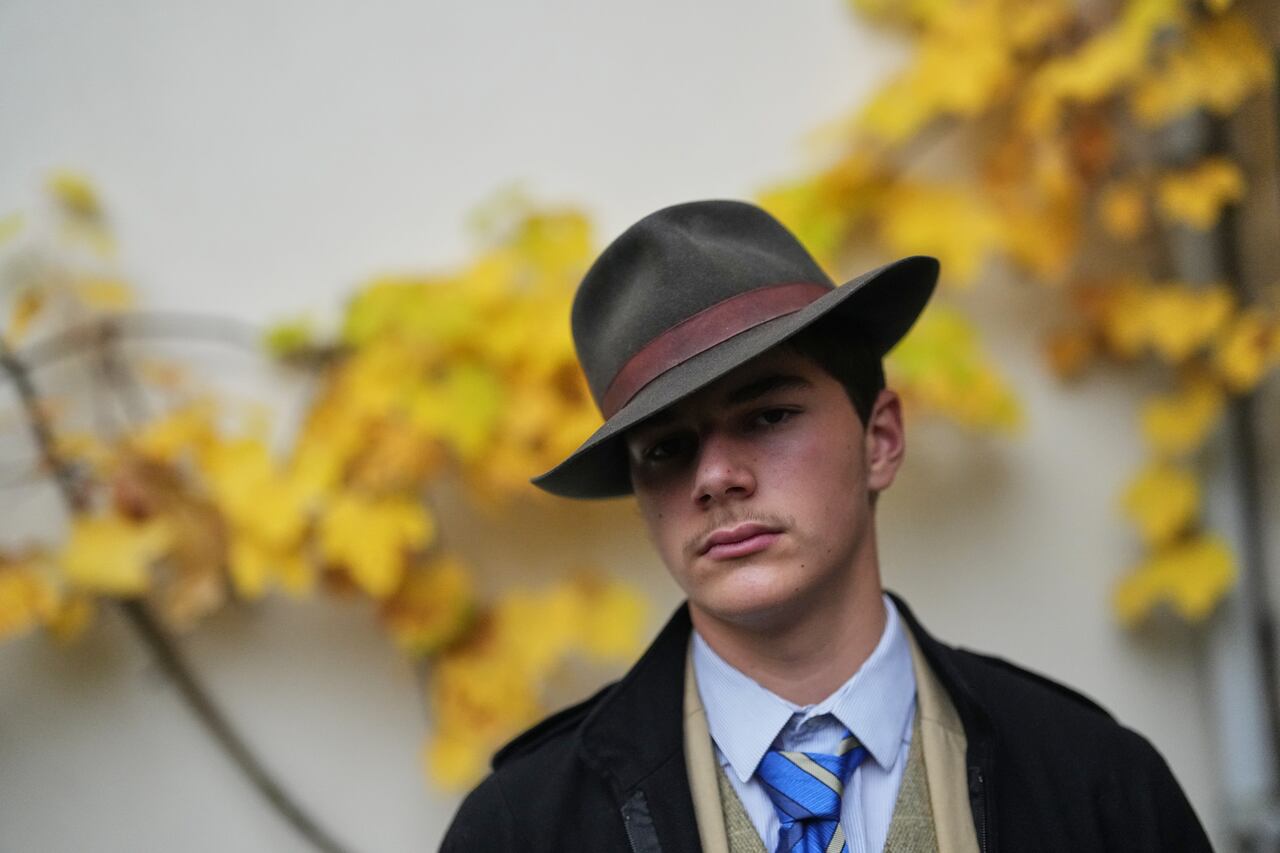
Delvaux poses after an interview with Associated Press on Nov. 8 in Rambouillet, south of Paris. (Thibault Camus/The Associated Press)
From photo to fame
The picture that catapulted him to fame was intended to document a crime scene. Three police officers lean against a silver vehicle obstructing a Louvre entrance, shortly after thieves executed a daytime theft of French crown jewels. To the right, a solitary figure in a three-piece suit walks by; a scene reminiscent of film noir amidst a contemporary manhunt.
The online community took it from there. “Fedora Man,” as he was dubbed by users, was portrayed as an old-fashioned detective, an insider, a potential Netflix storyline, or even an AI creation. Many believed he was generated by artificial intelligence.
Pedro recognized the reasoning behind this. “In the photo, I appear to be dressed more like someone from the 1940s, while we are in 2025,” he explained. “There’s a stark contrast.”
Even some family members and friends had doubts until they noticed his mother in the background.
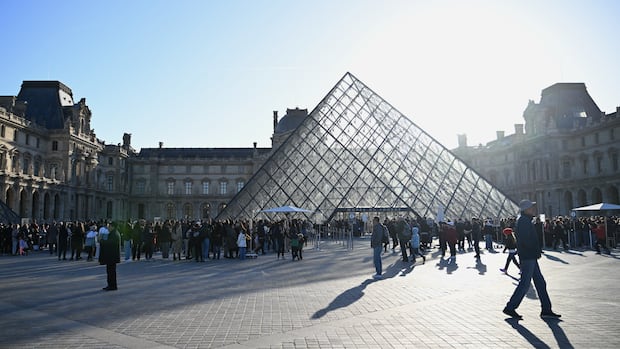
Security recommendations for the museum were first flagged in a French auditor’s report a decade ago, according to a report released Thursday. The heist that took place last month, where four robbers stole $143 million Cdn worth of jewels in broad daylight, reveals how poorly monitored the world-famous museum is. CBC’s Anna Cunningham shares more from London.
The actual situation was straightforward. Pedro, along with his mother and grandfather, had arrived to visit the Louvre.
“We wanted to visit the Louvre, but it was closed,” he recalled. “We had no idea there had been a heist.”
They inquired with the officers about the closed gates. Moments later, AP photographer Thibault Camus, capturing the security perimeter, caught Pedro as he walked by.
“I had no idea the picture was being taken,” Pedro remarked. “I was just passing through.”
Just four days later, a friend sent him a message: Is that you?
“She told me it had received five million views,” he said. “I was somewhat taken aback.” Then his mother called to inform him that he was featured in The New York Times. Cousins in Colombia, friends in Austria, and family friends and classmates followed up with screenshots and phone calls.
“People were saying, ‘You’ve become a star,’” he recalled. “I was amazed that one photo could go viral in just a few days.”
An inspired style
The outfit that captivated millions was not a costume hastily thrown together for a museum visit. Pedro began dressing this way less than a year ago, drawing inspiration from 20th-century history as well as black-and-white photographs of suited leaders and fictional detectives.
“I enjoy being stylish,” he shared. “I even go to school like this.”
He understands why people ascribed an entire detective persona to him: an improbable heist calls for an unlikely detective. He admires Poirot (“very elegant”) and appreciates the notion that a peculiar crime requires someone who stands out.
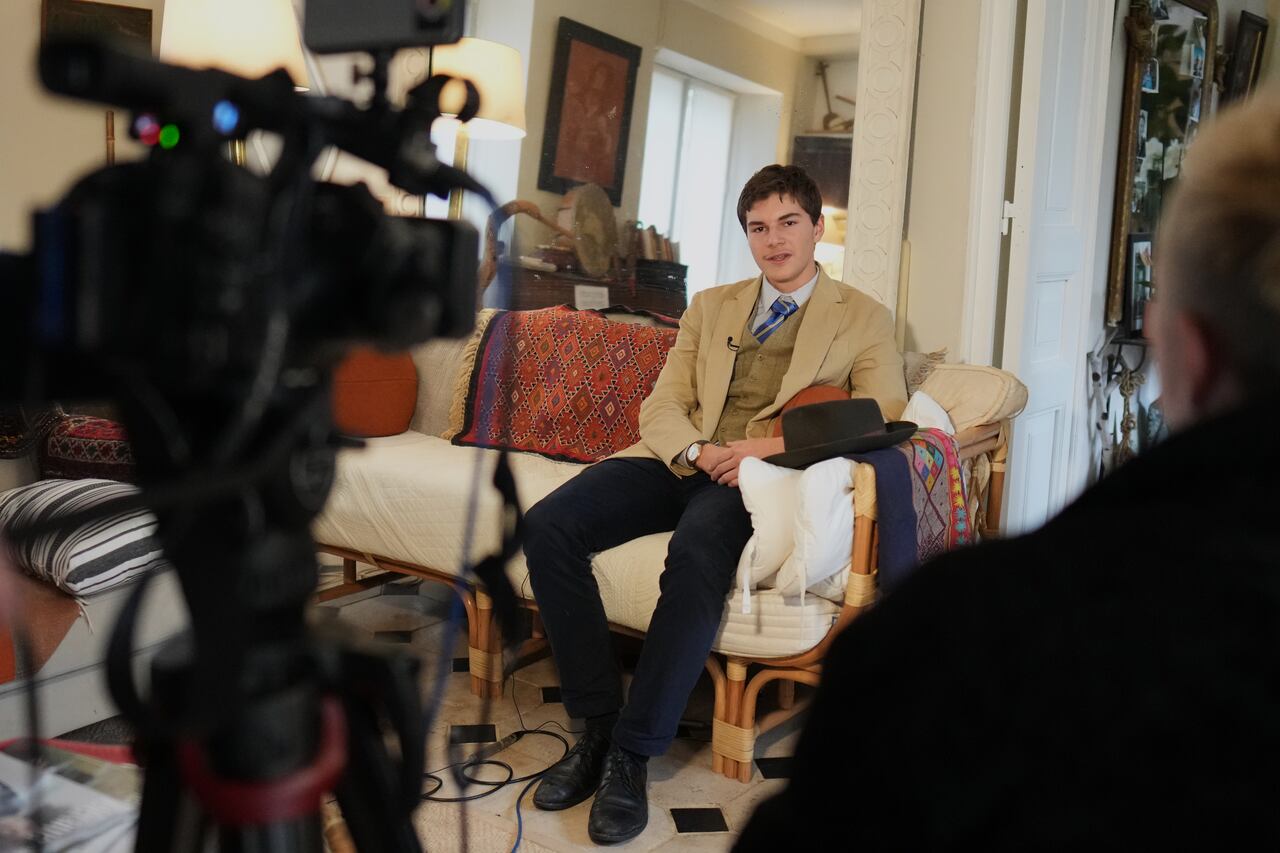
Delvaux during an interview Saturday in Rambouillet. (Thibault Camus/The Associated Press)
This affinity aligns with his background. His mother, Félicité Garzon Delvaux, was raised in an 18th-century museum palace, the daughter of a curator and a performer, and frequently takes her son to see exhibitions.
For Pedro, art and imagery have always been integral to his life. So, when millions of people began to weave stories around a single image of him in a fedora next to armed police at the Louvre, he chose to remain silent for several days, eventually transitioning his Instagram account from private to public.
“People needed to try to discover who I am,” he noted. “Then journalists approached me, and when I told them my age, they were incredibly surprised.”
He is calm about whatever opportunities may arise next. “I’m anticipating people reaching out to me for films,” he said with a smile. “That would be quite amusing.”

