
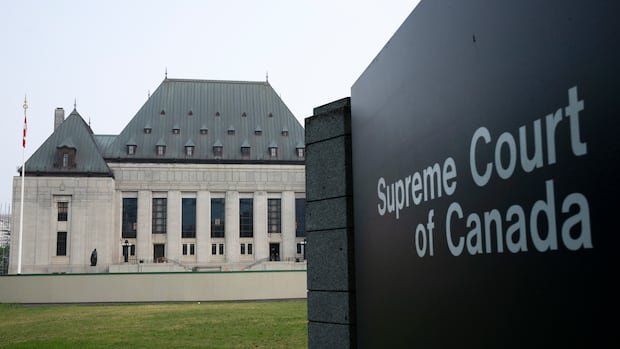
A recent ruling by the Supreme Court of Canada in a case of historical sexual abuse in Alberta highlights the importance of how courts handle sexual offences involving children. Following the court’s unanimous decision, Paul Sheppard was directed to surrender to authorities in April, just two months after being granted full parole. The Supreme Court’s ruling reinstated his original six-year sentence from 2021 for charges of sexual interference and invitation to sexual touching involving the victim, Steacy Easton, a former Grade 7 student at a school in Genesee, Alberta, where Sheppard was a teacher.
The Supreme Court’s decision, released on Friday, identified various flaws in the 2023 Alberta Court of Appeal judgment that had reduced Sheppard’s sentence. Chief Justice Richard Wagner specifically criticized the appeal court’s reference to outdated beliefs and stereotypes about sexual abuse victims. He emphasized that the credibility of complainants should not be undermined based on their behavior and highlighted that there is no standard way for victims of sexual abuse to react.
The court also noted a troubling pattern of child abuse by Sheppard while in positions of authority, a fact undisclosed during his trial or appeal process. Easton, who had previously been granted permission to disclose their identity in 2021, expressed relief at the court’s decision but also voiced frustration at the prolonged legal proceedings and the lack of control victims often have in such cases.
During the Supreme Court hearing, questions were raised about Sheppard’s criminal history, including past convictions for assault and sexual assault against boys during his time as a police officer. These earlier convictions were not disclosed during Sheppard’s 2021 trial, leading to further scrutiny of the legal process surrounding the case. Additionally, Sheppard had faced sexual abuse allegations from his time at a boarding school in the UK, where he was acquitted in 2015.
The Raoul Wallenberg Centre for Human Rights, the sole intervener in the Supreme Court case, criticized the Alberta Court of Appeal for relying on misconceptions about sexual violence in its decision. The Centre’s chief general counsel highlighted the importance of holding historical sexual offences against children to the same level of accountability as present-day crimes. The court’s ruling, in line with previous directives, emphasized the need for increased sentences for sexual offences involving children.
The Supreme Court’s decision has been seen as a step towards addressing misconceptions and providing a form of healing for survivors of sexual violence and victims of child abuse. While legal judgments may not fully repair the harm caused, the acknowledgment of the severity of such crimes and the accountability imposed can serve as a form of solace for those affected.

