
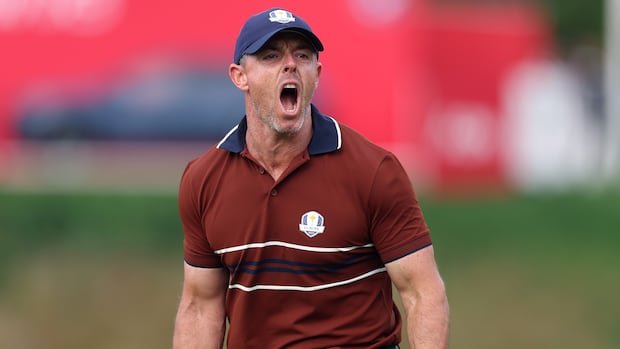
Rory McIlroy played a pivotal role in Europe’s victory at the Ryder Cup, but he criticized the hostile New York crowd for their “unacceptable and abusive behavior.” Throughout his five matches at Bethpage Black, McIlroy faced a barrage of insults ranging from personal attacks to past golf failures. Spectators disrupted his shots with heckling, and even his wife was hit by a thrown beer cup.
Expressing his dismay after helping Europe defeat the United States 15-13, McIlroy denounced the unruly behavior he faced. The Northern Irish golfer, aged 36, who aimed to secure his second Ryder Cup win on U.S. soil, occasionally reacted to the hecklers by cursing or pausing play until the disruptions subsided.
Despite the anticipation of rowdy and passionate crowds, McIlroy and his team found the behavior from some spectators crossing the line of decency. The golfer emphasized that such conduct should not be tolerated in golf, a sport known for its etiquette and respect.
Reflecting on the values of golf and its unifying nature, McIlroy stressed the importance of maintaining a higher standard of behavior at prestigious events like the Ryder Cup. He highlighted that the inappropriate behavior exhibited by a minority of fans overshadowed the respectful conduct of genuine golf enthusiasts present at the tournament.
As McIlroy led Europe to a commanding lead over the U.S., the negative reactions from a subset of American fans intensified. Despite the taunting and personal attacks, McIlroy remained focused on his game and contributed significantly to his team’s success.
In the end, with Europe’s victory all but assured, McIlroy emerged as a key figure in the triumph. His impressive performance at the Ryder Cup, coupled with his previous achievements in golf, solidified his reputation as a top player in the sport. Looking ahead to future events, McIlroy emphasized the importance of supporting players with respect and sportsmanship, urging fans to uphold the values of the game.
As McIlroy celebrated the win and looked forward to future competitions, he emphasized the need for a more respectful and supportive environment in golf, particularly at high-profile events like the Ryder Cup.

