
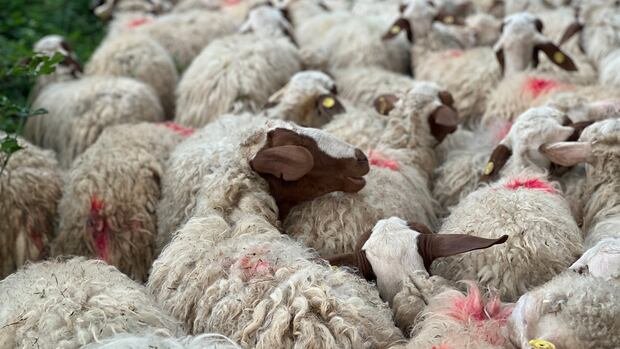
On a breezy autumn day, the gently undulating hills near Rome became the backdrop for an unexpected meeting. Wool producers, designers, activists, and even model, actress, and farmer Isabella Rossellini, along with her daughter, gathered at Ilaria Venturini Fendi’s farm. Their aim was not to celebrate high-end fashion but to revolutionize it.
“It’s a challenge to produce wool in Italy,” mentioned Fendi, who tends to 600 sheep at her agriturismo on the outskirts of Rome. She highlighted the struggle of wool becoming a discarded byproduct due to high processing costs outweighing profits. There is a need for a shift in mindset to reshape economies.
In Europe and North America, the outlook is grim for wool, a biodegradable fiber that is water- and fire-resistant and naturally regulates body temperature. Often, wool is burned or wasted due to economic reasons.
To address these issues, Fendi hosted the inaugural World Hope Forum in-person, a network dedicated to demonstrating that wool production can be ethical, local, and circular.
Fendi, coming from a background steeped in luxury as a member of the renowned Italian fashion family, departed the business to establish Carmina Campus, a label focused on reuse and regeneration.
The meeting preceded the UN’s upcoming International Year of Rangelands and Pastoralists in 2026, emphasizing the importance of preserving traditional herding cultures and natural fibers. It also preceded the initial gathering of the EU Focus Group on innovative and sustainable strategies to revitalize the European wool value chain.
One of the attendees, Blátnaid Gallagher, spearheads Ireland’s Galway Wool Co-op, dedicated to reviving native Irish wool and advocating for clearer fiber origin regulations across Europe. Gallagher aims to reduce reliance on Chinese wool and bolster support for local farmers.
Cynthia Hathaway, a designer based in the Netherlands, is another advocate for sustainable wool production. Through her Wool March initiative, she conducts sheep-led walks into cities to spotlight the ecological and cultural significance of wool.
Gallagher and others foresee a resurgence in natural fibers but stress the necessity of enhanced protections for both producers and animals. Currently, less than one percent of global textile fibers come from wool, leading to the closure of many local wool processing facilities in Europe and North America.
Reina Ovinge, who transitioned from fast fashion to establish the Knit Wit Stable in the Netherlands, highlighted the challenges faced by small producers due to plummeting wool prices. Ovinge adopted a micro-supply chain model, involving on-farm shearing, sorting, and processing, aiming to sustain local wool production.
Isabella Rossellini and Elettra Wiedemann manage Mama Farm in Brookhaven, N.Y., a space promoting biodiversity through organic cultivation and heritage sheep breeding. The farm hosts initiatives like Farm to Fashion, bridging young designers with heritage wool for exclusive sweater creations.
While some wool producers are scaling up sustainably with recycled wool, Matteo Mantellassi, CEO of Manteco, advocates for the use of post-consumer wool. His company’s MWool and ReviWool products significantly reduce CO2 emissions and water usage compared to virgin wool.
Mantellassi emphasizes the importance of educating young designers on sustainable fabric choices and collaborating with policymakers to promote eco-friendly textile practices.
The push for circular and sustainable wool production is gaining momentum, with industry experts and advocates focusing on local, ethical, and eco-friendly approaches to revive the wool industry.

