
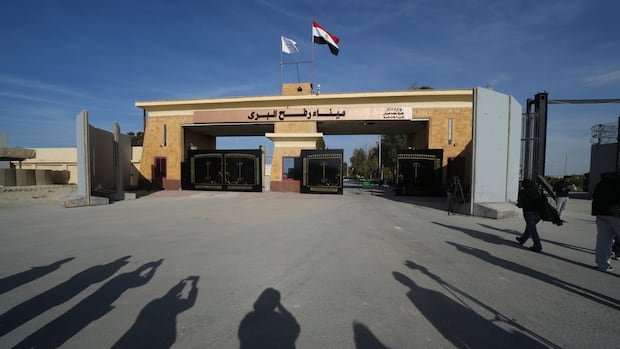
The Palestinian Embassy in Egypt announced on Saturday that the Rafah border crossing between Gaza and Egypt will open on Monday for individuals returning to Gaza. However, the crossing will remain closed for those attempting to exit Gaza, according to a statement from Israeli Prime Minister Benjamin Netanyahu’s office. The reopening of the Rafah crossing, controlled by Egypt before the conflict, has been a subject of contention, with conflicting statements from various parties.
The Foreign Affairs Ministry of Israel had previously indicated that the crossing might resume operations on Sunday, a move seen as a step towards maintaining the fragile ceasefire agreement. The closure of the Rafah crossing since May 2024, when Israel took control of the Gaza side, has significantly impacted the movement of people in and out of the territory.
The potential full reopening of the Rafah crossing could facilitate easier access for Gazans seeking medical treatment, travel, or visits to Egypt, where a substantial Palestinian population resides. However, uncertainties remain regarding the operational management of the crossing’s severely damaged Gaza side post-war.
In response to Netanyahu’s decision to keep the crossing closed, Hamas condemned the move, labeling it a breach of the ceasefire terms and reneging on commitments made to mediators. The ongoing closure of the Rafah crossing poses challenges for accessing essential equipment to locate and retrieve additional bodies trapped under debris, further delaying the recovery process.
As efforts continue to recover victims in the aftermath of the conflict, Gaza’s Health Ministry reported an increasing death toll, surpassing 68,000 Palestinian casualties. The Red Cross highlighted the significant number of missing individuals, emphasizing the humanitarian crisis unfolding in Gaza.
In a separate development, the U.S. State Department raised concerns over credible reports of an imminent attack planned by Hamas against Gaza residents, warning of potential violations of the ceasefire agreement. The statement underscored the need for Hamas to adhere to its obligations to sustain the progress achieved through mediation efforts.
Israel’s military confirmed the transfer of two deceased hostages’ remains by Hamas to the Red Cross in Gaza, marking a step towards fulfilling ceasefire terms by returning the bodies of the deceased. However, challenges persist in swiftly repatriating all hostages’ remains, with Israel urging Hamas to expedite the process amid logistical obstacles.
Hamas accused Israel of ongoing violations and attacks, citing casualties among Palestinians since the ceasefire commenced. The situation remains tense, with both sides exchanging accusations amidst the fragile peace.
Humanitarian aid remains a crucial issue, with Hamas calling for increased aid flow, full reopening of the Rafah crossing, and reconstruction efforts in Gaza. Despite some aid trucks entering Gaza, restrictions and delays persist, impacting the delivery of essential supplies to the war-torn region.
The aftermath of the conflict has exacerbated the humanitarian crisis in Gaza, with reports of food insecurity and malnutrition-related deaths. Disputes over aid distribution and access continue, reflecting the complex challenges facing Gaza’s population post-war.

