
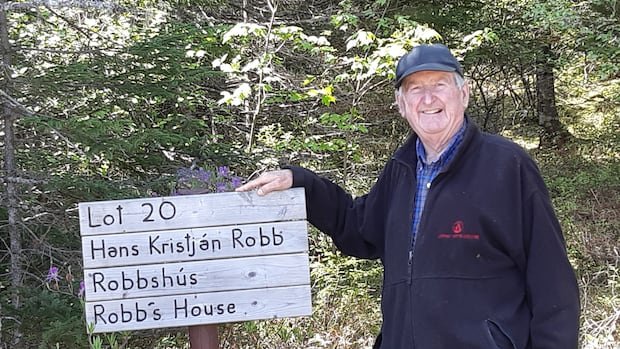
Marshall Burgess takes pride in his Icelandic heritage in Nova Scotia and is committed to preserving his family’s history. His grandmother, Steinvor Nicolina Erlendsdottir, was born in Iceland and was among the Icelandic immigrants who came to the province in the late 19th century.
As the vice-president of the Icelandic Memorial Society of Nova Scotia, established in 1998 to honor the contributions of these settlers, Burgess emphasizes the significance of acknowledging this aspect of their past. The initiative to attract Icelandic immigrants to Nova Scotia commenced post-Confederation with the assistance of John Anderson, an Icelander residing in Halifax who was appointed as an immigration agent.
The first group of about 80 Icelanders arrived in Nova Scotia in 1875 from a failed settlement in Kinmount, Ontario. The Nova Scotia government offered them land, log cabins, tools, and supplies in exchange for their commitment to stay and cultivate the land. Despite the challenges faced by the settlers in establishing communities like Markland, near the Musquodoboit River gold mines, their perseverance was evident.
Most Icelandic families left Nova Scotia within six years, enticed by opportunities in Manitoba and North Dakota. However, Burgess’s ancestors, the Huskilson family, chose to remain in the smaller Lockeport settlement due to employment opportunities.
The Icelandic Memorial Society has undertaken various projects to commemorate these settlers, including erecting memorial cairns and rebuilding a log cabin based on historical records. In 2024, the society secured a grant from Halifax Regional Municipality to install interpretive signs at the Markland site.
Today, with 52 members, many of whom are descendants across North America, the society organizes events like the Markland Walk, an annual eight-kilometer walk to the original settlement. Burgess, who has visited Iceland multiple times and reconnected with relatives there, underscores the importance of preserving and celebrating their Icelandic heritage.

