
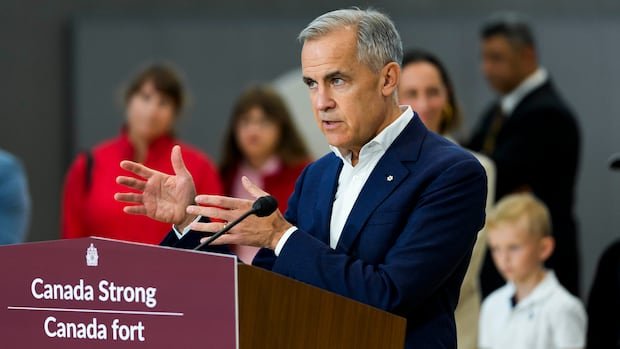
Prime Minister Mark Carney indicated on Friday that the future of the emissions cap imposed on oil and gas producers is contingent on additional measures to reduce emissions. This suggests a potential willingness to discard the policy, marking a departure from his previous commitment earlier in the year. During a press briefing in Ottawa, Carney responded to inquiries about the possibility of eliminating the cap and the tanker ban along the B.C. coast, measures that the oil and gas industry and the Alberta government have urged Ottawa to revoke. Carney emphasized that the government’s focus is on achieving results rather than merely setting objectives, stressing the importance of lowering emissions in the energy, mining, and manufacturing sectors to enhance global competitiveness.
Despite Carney’s earlier affirmation in March to maintain the emissions cap, he has also expressed a desire to explore alternative methods to reduce emissions. The emissions cap, scheduled to come into effect in 2030, mandates upstream oil and gas operations to decrease their emissions to 35 percent below 2019 levels. This initiative aligns with Canada’s commitment under the Paris climate accord to reduce emissions by at least 40 percent below 2005 levels by 2030. However, Carney and his ministers have refrained from addressing this specific target, instead underscoring Canada’s ambition to achieve net-zero emissions by 2050.
The emissions cap forms a crucial component of Canada’s strategy to meet its emission reduction targets, with the oil and gas sector responsible for roughly 30 percent of total greenhouse gas emissions. Notably, the sector experienced a 1.9 percent increase in emissions last year, counteracting reductions achieved in other sectors, according to a report by the Canadian Climate Institute. Various studies indicate that Canada is currently not on track to meet its 2030 emission reduction goal, as emissions are currently around 8.5 percent lower than 2005 levels.
Carney disclosed ongoing discussions with Alberta Premier Danielle Smith, focusing on a potential “grand bargain” that would link Alberta’s pipeline aspirations to the completion of the Pathways Alliance carbon capture project. Smith aims to submit a proposal to the Major Projects Office by spring after potentially reaching a deal by mid-November. When questioned about supporting a new pipeline to the West Coast, Carney emphasized the government’s interest in nation-building projects, including conventional energy initiatives, provided they offer tangible economic benefits, align with climate objectives, and deliver advantages for Indigenous communities.
The debate surrounding pipeline projects has intensified, with industry leaders and Smith reiterating that no pipeline endeavor is viable as long as the emissions cap and tanker ban persist. Enbridge CEO Greg Ebel underscored the industry’s reluctance to pursue projects hindered by the current regulatory framework. Tensions have escalated between Smith and B.C.’s NDP Premier David Eby, with the latter cautioning against compromising the existing consensus on resource development by repealing the tanker ban.
In Senate question period, Energy and Natural Resources Minister Tim Hodgson faced queries about Ottawa’s role in facilitating pipeline projects. Hodgson emphasized the need for interprovincial pipelines to garner support from the jurisdictions in which they are constructed, emphasizing Alberta’s reliance on B.C.’s cooperation for project advancement. Carney’s recent discussions with U.S. President Donald Trump also revolved around potentially reviving the Keystone XL pipeline in exchange for concessions benefiting Canada’s steel and aluminum sectors.
Critics have raised concerns that the Keystone XL project, even if revived, could encounter obstacles if the government maintains its stance on the emissions cap, highlighting the importance of aligning economic ventures with environmental objectives.

