
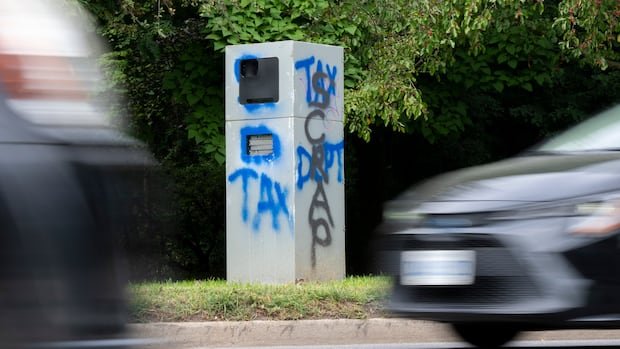
Ontario Premier Doug Ford has rejected the plea from over 20 mayors throughout the province to modify, rather than eliminate, the speed camera initiative, affirming his commitment to addressing speeding through alternative strategies.
The mayors, spearheaded by Brampton Mayor Patrick Brown and Burlington Mayor Marianne Meed Ward, argue that a complete ban on automated speed cameras would undo years of safety advancements in school zones and place additional strain on law enforcement.
However, Ford dismisses their proposal as merely a revenue-generating scheme, citing the ongoing issuance of tickets as evidence of the program’s failure to effectively deter speeding motorists.
In a letter to the mayors, Ford highlighted a significant increase in fines issued by speed cameras in Ontario from 2020 to 2024, totaling over $52 million, emphasizing that the cameras have not succeeded in curbing speeding violations.
The premier criticized municipalities advocating for the retention of speed cameras as “self-serving,” suggesting that implementing physical traffic-calming measures such as speed bumps and roundabouts would be more effective in reducing speeding incidents.
Ford proposed an alternative approach involving the installation of traffic-calming infrastructure to achieve a zero-speeding outcome, arguing that speed cameras are ineffective.
Data from various municipalities and research conducted by the Hospital for Sick Children and Toronto Metropolitan University indicate that speed cameras contribute to reduced traffic speeds.
Meed Ward expressed concerns that scrapping the program would shift the financial burden of road safety improvements onto taxpayers instead of holding speeders accountable.
The mayors recommended potential modifications to the program, such as restricting cameras to school zones, operating them only during school hours, and setting a minimum speed threshold for fines.
Meed Ward emphasized the importance of prioritizing road safety, particularly in school zones, to protect vulnerable individuals from the dangers of speeding vehicles.
Ford pledged to introduce legislation to ban speed cameras, emphasizing his stance that the initiative is ineffective and unjustly targets motorists.
The mayors also urged the provincial government to fully compensate municipalities for the loss of speed camera revenues used for traffic-calming initiatives and other related expenses.
While Ford assured indemnification for the cancellation of speed camera contracts, he emphasized that the burden of costs should be borne by the speed camera operators or through existing funds accumulated from the program’s revenues.
Overall, the debate surrounding the speed camera program underscores the differing perspectives on road safety enforcement and the financial implications for municipalities in Ontario.

