
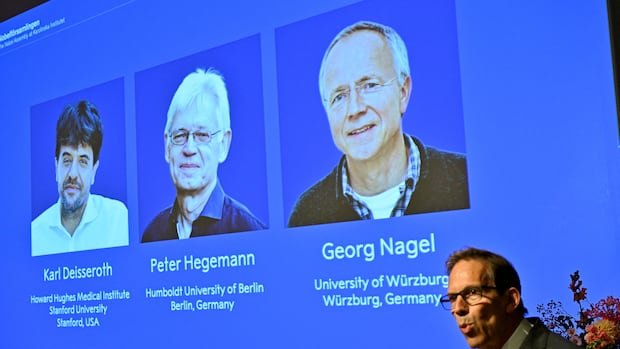

The 2026 Nobel Prize in Physiology or Medicine has been awarded to scientists Karl Deisseroth, Peter Hegemann, and Georg Nagel for their groundbreaking work on light-gated ion channels and optogenetics, announced by the Nobel Assembly at Karolinska Institutet in Stockholm.
Optogenetics, a technique allowing the manipulation of individual nerve cell activity in the brain, has revolutionized neuroscience research worldwide, according to Thomas Perlmann, the secretary general of the Nobel Assembly.
Expressing their surprise and delight, the three laureates, Deisseroth from the U.S., Hegemann and Nagel from Germany, emphasized their mutual respect and camaraderie during the award announcement.
Each scientist will receive a share of the 12 million Swedish crowns prize money. Deisseroth works at Stanford University, Hegemann at Humboldt University, and Nagel at the University of Würzburg.
The Nobel Committee member Anna Wedell highlighted the significant impact of optogenetics on neuroscience, predicting a transformative future in understanding brain function and neural interactions.
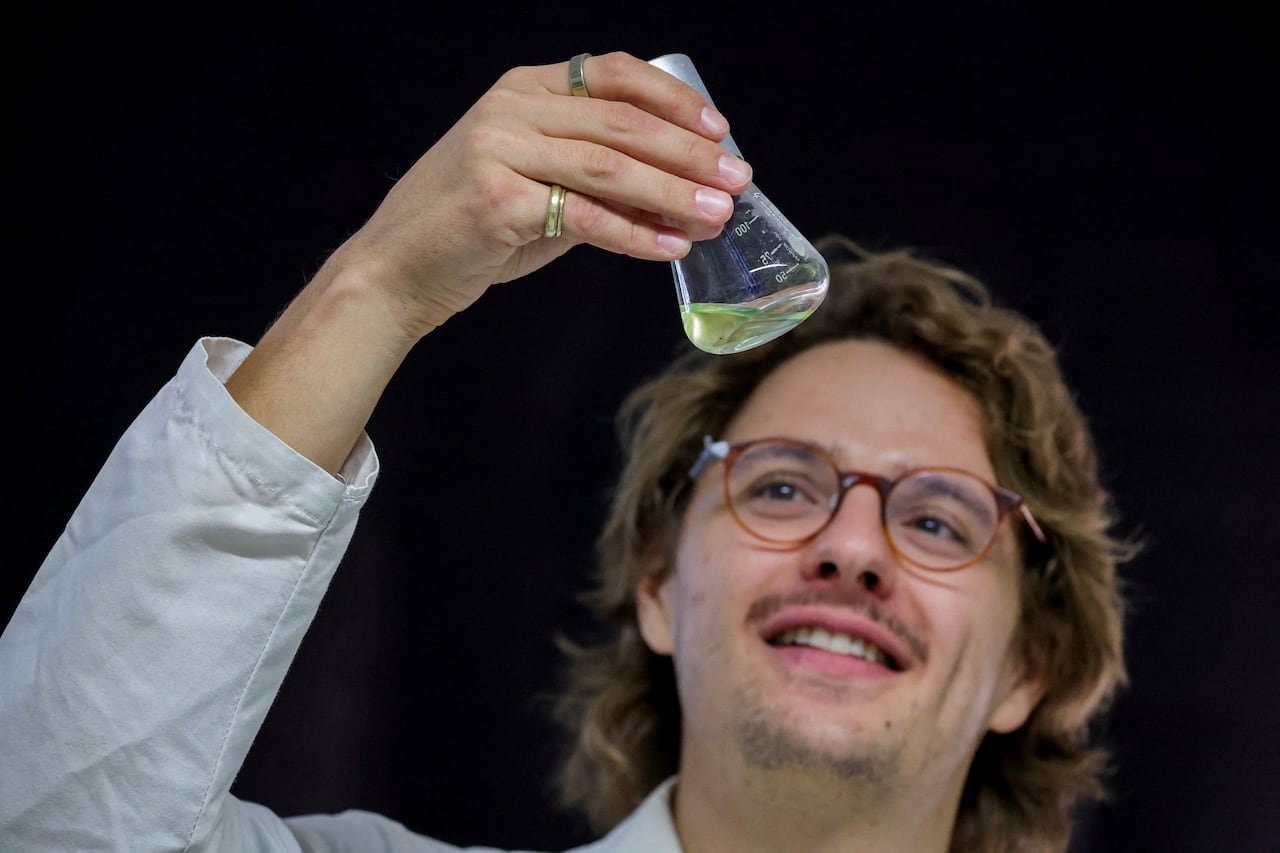
Darius Rauch, a member of Peter Hegemann’s team, holds a flask with solved Chlamydomonas reinhardtii in a laboratory at the University of Berlin on Monday. (Fabrizio Bensch/Reuters)
Recent clinical trials have shown promising results in restoring vision to individuals suffering from retinitis pigmentosa using light-sensitive proteins in the retina. Researchers are also exploring the potential of optogenetics in enhancing cochlear implants for improved auditory nerve stimulation.
Per Svenningsson, a neurology professor at Karolinska Institute, explained the mechanism of optogenetics in activating the optic nerve to generate visual perception in patients with retinal degeneration.
Decades of Progress
The journey towards optogenetics began in the early 1990s when Hegemann and Nagel identified channelrhodopsin-2, an ion channel sensitive to light, through their research on Chlamydomonas. Deisseroth later demonstrated the application of this discovery in nerve cells, leading to the birth of optogenetics in 2006.
Reflecting on their collaborative achievements, Deisseroth acknowledged the shared success with his colleagues, emphasizing their long-standing partnership and impactful discoveries.
Originally aspiring to be a neurosurgeon, Deisseroth’s career path shifted towards psychiatry due to his encounters with patients facing mental health challenges, prompting his exploration into the underlying causes of conditions like depression and autism.
Upcoming Nobel Prize announcements include physics and chemistry on the following days, culminating with the awards for literature, peace, and economics in the upcoming week.
<p class="paragraph-b3GxD html
