
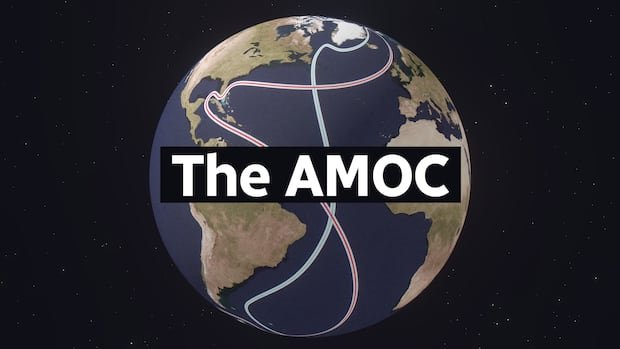
In the 2004 movie, “The Day After Tomorrow,” a fictional scenario depicted the planet plunging into an ice age due to a disrupted ocean current system known as the Atlantic Meridional Overturning Circulation (AMOC). While the film was purely a work of Hollywood imagination, the scientific basis behind the climatic consequences portrayed in the movie is real.
The AMOC is a crucial component of the global ocean circulation system, acting as a massive conveyor belt that transports heat, water, and carbon around the world. This system plays a vital role in regulating global weather patterns and supporting marine ecosystems. Recent concerns have been raised by scientists regarding a slowdown in the AMOC and the potential severe global impacts it could trigger.
A study conducted by the University of Miami examined data from various locations in the Atlantic, including the Scotian Shelf off the coast of Nova Scotia. The findings revealed that the AMOC has already slowed by 10 to 20 percent over the past two decades. Climate models have long predicted this slowdown, attributing it to the surface ocean becoming less dense due to global warming, inhibiting deep water mixing and renewal.
The study forecasts a potential 51% slowdown in the AMOC by the year 2100 under a mid-range greenhouse gas emissions scenario. This projection comes with a margin of error of plus or minus eight percentage points. If the AMOC continues to weaken, it could have dire consequences for global agriculture, food production, climate patterns, ecosystems, and sea levels.
Further research indicates that the AMOC slowdown could lead to more intense winter storms, such as Nor’easters, and warmer waters off the coast of Nova Scotia. The implications extend to reduced oxygen levels in the water, impacting marine organisms. The weakening of the Labrador current and warming of the Scotian Shelf could have significant repercussions for Atlantic Canada, including Nova Scotia.
Experts emphasize the need for increased data collection and research on the AMOC to better understand and prepare for the potential consequences. Ultimately, reducing the risks associated with AMOC disruption requires a swift transition away from fossil fuels and a commitment to the goals outlined in the Paris climate agreement.
As the world grapples with the implications of a possible AMOC slowdown, the urgency to address climate change and its impacts on ocean currents grows. The need for proactive measures to mitigate these risks and safeguard our environment for future generations is paramount.

