
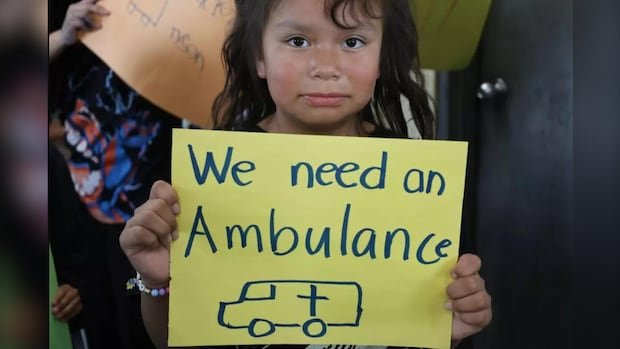
Paul Dubé expressed his immediate reaction upon arriving at Neskantaga First Nation, acknowledging the stark realities of the remote Ojibway community. The airport, described by the Ontario ombudsman as a rundown facility, greeted him with children holding handmade signs advocating for clean drinking water, a medical center, an ambulance, and a new school.
During a two-day visit last week, Dubé engaged with community members to discuss the myriad challenges they encounter daily, notably the enduring 30-year boil-water advisory, the longest in the country. As an independent body of the Legislature receiving complaints about various government and public-sector entities, the ombudsman is dedicated to upholding government accountability through investigations and recommendations for enhancing public services.
Following an invitation from Chief Gary Quisses to tour Neskantaga First Nation, Dubé urged both provincial and federal governments to promptly address the community’s unacceptable and hazardous conditions. Expressing his dismay, Dubé emphasized the need to provide their services to assist the community, as reported by CBC News.
Describing concerning issues such as mold-infested houses, inadequate water treatment facilities, a closed police station due to communication deficiencies, and an insufficient temporary nursing station, Dubé highlighted the challenges faced by the community. Additionally, he noted the limitations of the aging school only accommodating up to Grade 8, forcing students to relocate to Sioux Lookout or Thunder Bay to complete high school.
The community, comprising fewer than 400 residents, located 500 kilometers north of Thunder Bay, has awaited a new youth cultural center for nearly a decade. Despite the community’s resilience, Dubé acknowledged prevalent mental health and addiction issues jeopardizing the lives of young individuals, expressing his heartbreak at the living conditions in Canada in 2025.
The response from Ontario’s Ministry of Indigenous Affairs and First Nations Economic Reconciliation addressed the concerns raised by the ombudsman, emphasizing collaborative efforts with Neskantaga First Nation and the federal government to support the resolution of prolonged drinking water advisories and enhance community safety and well-being. While Ontario collaborates with First Nations and tribal councils on clean water initiatives, they call on the federal government to fulfill its constitutional duty of ensuring safe water on reserves and allocating sufficient funds for water system maintenance.
Indigenous Services Canada (ISC) conveyed Minister Mandy Gull-Masty’s commitment to meet with Neskantaga’s leadership soon, underscoring the importance of community-led solutions and investments in infrastructure and well-being programs. ISC has allocated over $155 million since 2020 to support community initiatives in Neskantaga, as reported in an email by Pascal Laplante from ISC.
Chief Quisses lamented the lack of accountability from successive governments since the initiation of Neskantaga’s boil-water advisory, stressing the community’s neglect and substandard living conditions. Expressing gratitude for the ombudsman’s visit, Quisses urged provincial and federal officials to witness firsthand the challenges his community faces and prioritize resolving them promptly.
The Ontario ombudsman’s office is developing its inaugural Indigenous Services Plan to raise awareness of First Nations’ challenges and establish guidelines for culturally sensitive services. In the interim, Quisses reiterated his commitment to advocating for the struggles encountered by Neskantaga residents, emphasizing the importance of sharing their stories to prompt action and awareness.
The full article can be accessed through the provided source link.

