
Voices with close ties to the U.S. military are now expressing concerns about recent boat strikes on alleged drug-carrying vessels in the Western hemisphere carried out by the Trump administration since September 2. A Pentagon employee who chose to remain anonymous and a retired U.S. Air Force colonel have raised alarms about the potential impact of focusing on drug flows in Latin America on American military capabilities globally and the unintended consequences it may lead to, such as reduced cooperation with allies in combating drug-related fatalities.
The Pentagon employee criticized the administration’s legal justification for the strikes, labeling it as nonsensical. The administration has labeled drug cartels as enemy combatants, drawing a comparison with Islamist terror groups, which the Pentagon employee argued is flawed since cartels lack the structured command typical of terrorist organizations. Additionally, the U.S. has a track record of directly confronting drug traffickers, unlike terrorists who often operate in remote, secure locations worldwide.
Retired U.S. Air Force colonel J. William DeMarco echoed concerns about the messaging behind the strikes, suggesting they are aimed at intimidating Venezuelan President Nicolás Maduro and showcasing U.S. strength to global powers like China and Russia. The strikes have resulted in the deaths of at least 61 individuals as of the latest reports.
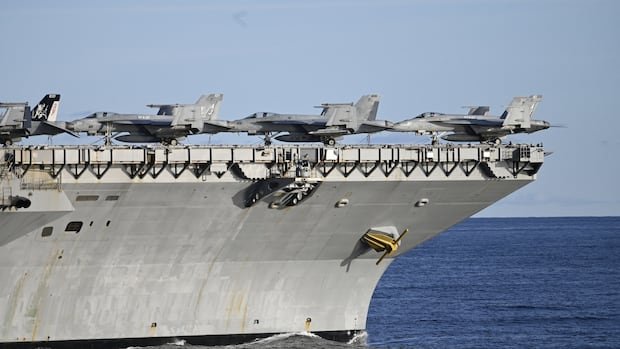
The U.S. has shifted its military focus to the Western hemisphere, redirecting the nuclear-powered aircraft carrier USS Gerald R. Ford to South America, leaving no aircraft carriers deployed in Europe and the Middle East. This move coincides with escalating violence in Gaza, with Israel conducting military actions in Palestinian territories.
Critics have highlighted the administration’s disproportionate emphasis on drug trafficking, despite uncertainties about the content of the targeted vessels and their destinations. They argue for a more comprehensive approach that includes addressing addiction services in the U.S. and tackling the opioid crisis, which has contributed significantly to drug-related deaths in America over the past decade.
The use of lethal force by the Trump administration has drawn condemnation both domestically and internationally, with concerns raised about transparency and potential violations of international laws. While the full implications of these actions remain to be seen, the administration’s stance on combating drug cartels aligns with earlier indications during Trump’s campaign and the subsequent executive orders signed upon taking office.
It is a contentious area where Trump has shown consistency, unlike in trade matters. The administration’s approach to combating drug cartels has historical precedents, such as past U.S. interventions in the region targeting drug traffickers.

