
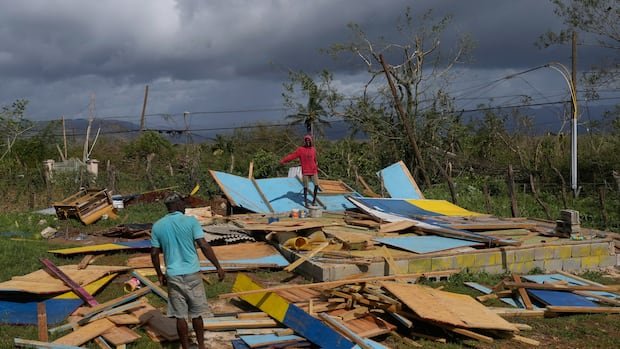
Jamaica has spent the last ten years establishing financial safeguards against natural disasters. With the recent devastation caused by Hurricane Melissa, the country’s preparedness strategy may prove beneficial and serve as a blueprint for other nations vulnerable to climate-related events.
In 2021, Jamaica introduced a catastrophe bond worth $150 million US, designed to activate under specific conditions related to hurricane intensity and trajectory. Florian Steiger, CEO of Icosa Investments, explained that the bond is linked to the hurricane’s central pressure upon landfall, with verification from a third party confirming that the threshold has been exceeded, ensuring imminent payouts.
Jamaica stands to receive funds promptly, supported by diverse disaster risk mitigation measures, such as insurance coverage for extreme weather events and access to credit lines from entities like the World Bank and Inter-American Development Bank. Conor Meenan, a risk financing adviser at the Centre for Disaster Protection, commended Jamaica’s comprehensive strategy as one of the most robust globally.
The country’s Finance Ministry disclosed that approximately $820 million US is readily available for post-disaster recovery efforts. While this sum may not cover the entire projected damage costs from Hurricane Melissa, insurance-backed financing will expedite the restoration of critical services like infrastructure and healthcare.
Jamaica’s $150 million US catastrophe bond, issued in collaboration with the World Bank in 2024, was funded independently by the country and purchased by predominantly North American and European investment firms. The bond matures in 2027, spanning four hurricane seasons, following a previous successful issuance in 2021, which was donor-funded and renewed the subsequent year.
In the event of no payout trigger, Jamaica will reimburse investors the full principal plus interest by December 29, 2027. Conversely, if activated, the bond’s payout will be directed to Jamaica, varying based on the hurricane’s severity. Unlike traditional insurance, this bond’s payout hinges on storm intensity rather than damage assessment or rebuilding costs.
The catastrophe bond’s unique structure divides Jamaica into distinct zones with specific central air pressure thresholds that, if breached by a hurricane, trigger payouts. Hurricane Melissa’s landfall central air pressure of 892 millibars indicated a severe storm, warranting a full bond payout.
While a $150 million US loss might seem substantial for investors, industry experts note that within the broader market exceeding $50 billion US, the impact remains manageable. The catastrophe bond market, primarily prevalent in wealthier nations like the U.S., presents an opportunity for lower-income countries to mitigate climate risks and attract additional investments.
Jamaica’s innovative approach could serve as a model for other climate-vulnerable nations in accessing post-disaster funds swiftly. As governments prepare for escalating storm severity due to climate change, Jamaica’s effective utilization of insurance and financial instruments sets a precedent for bolstering global economic resilience and risk-sharing initiatives.
In conclusion, while catastrophe bonds are not a standalone solution, they contribute significantly to enhancing economic resilience worldwide and fostering collaborative risk management practices across borders.

