
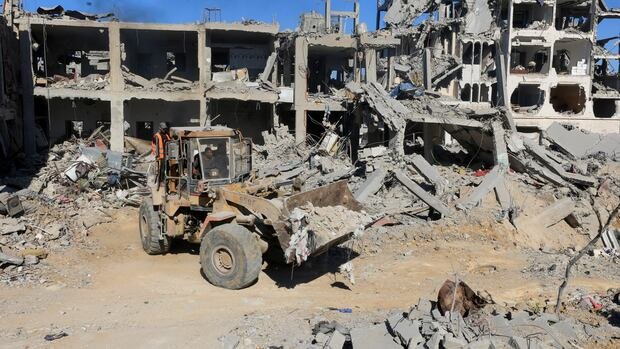
Israel announced its readiness to reopen the Rafah crossing in Gaza with Egypt for Palestinian movement, without setting a specific completion date. Tensions persist with Hamas over the return of hostages’ bodies, posing a threat to the ceasefire. The Israeli government reiterated its commitment to the agreement, urging Hamas to deliver the 19 remaining bodies. Hamas has handed over 10 bodies, asserting difficulties in recovering more due to the need for heavy machinery in the blockaded enclave.
Hamas accused Israel of violating the ceasefire by allegedly killing 24 individuals since Friday, submitting a list of alleged violations to mediators. Israel, in response, stated that it fired in self-defense against threats approaching ceasefire positions. An Israeli airstrike in Khan Younis resulted in the death of two individuals, with Israel claiming they posed an immediate threat to troops.
The next phase of the peace plan requires Hamas to disarm and relinquish power, with Hamas resisting these demands. Meanwhile, Trump threatened intervention if Hamas continued violence. Notably, 20 hostages were released in exchange for Palestinian prisoners, and bodies of deceased Palestinians were returned by Israel.
Long-term aspects of Trump’s plan, such as forming an international stabilization force and creating a Palestinian state, remain unresolved. The PA aims to address Gaza’s challenges with international support. Discussions on aid distribution and reconstruction are ongoing, with Israel coordinating with Egypt on the Rafah crossing reopening for people’s movement.
A substantial increase in aid is crucial due to famine conditions in Gaza, with UN agencies and humanitarian organizations intensifying efforts to address the crisis. Hamas stressed the urgent need for continuous aid and essential supplies. The conflict has devastated Gaza, leading to significant casualties and displacement. The war stemmed from Hamas’s 2023 attack on southern Israel, resulting in casualties and hostages taken back to Gaza.

