
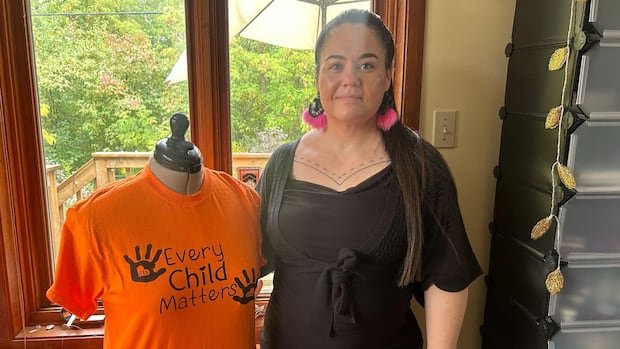
In Jennifer Qupanuaq May’s cozy home office in Pointe-Claire, Montreal, a vibrant orange fabric adorns the table. The Inuk designer proudly displays a handcrafted shirt on a mannequin, bearing the words “Grandson of a Residential School Survivor” on its back.
Originally from Kuujjuaq in Nunavik, northern Quebec, May has been creating orange shirts for four years. This endeavor holds personal significance for her, serving as a catalyst for crucial conversations within her community.
Orange Shirt Day, observed on September 30 as the National Day for Truth and Reconciliation, urges individuals nationwide to wear orange in support of Indigenous children who endured residential schools and their families. However, concerns have surfaced as the commercial availability of these shirts potentially dilutes their impactful message.
The origin of the orange shirt traces back to Phyllis Webstad, a Northern Secwepemc from Stswecem’c Xgat’tem First Nation. The story of her orange shirt being taken away on her first day at a residential school symbolizes the cultural erasure inflicted on generations of Indigenous children.
While the grassroots movement by Indigenous artists has transitioned into mainstream availability, some, like Mi’kmaw artist Stephen Jerome, worry that commercialization may strip the symbol of its significance. May advocates for supporting Indigenous artists directly and suggests opting for plain orange shirts over mass-produced ones.
Conversely, proponents of wider dissemination view mass production as a means to amplify awareness. The Orange Shirt Society, established by Webstad, collaborates with major retailers to broaden visibility and raise funds for survivor support programs.
Despite differing perspectives on commercialization, the essence of Orange Shirt Day remains paramount: to remember, educate, and honor Indigenous communities. Whether crafted in a home studio or sold in stores, the resounding message persists — every child matters.

