
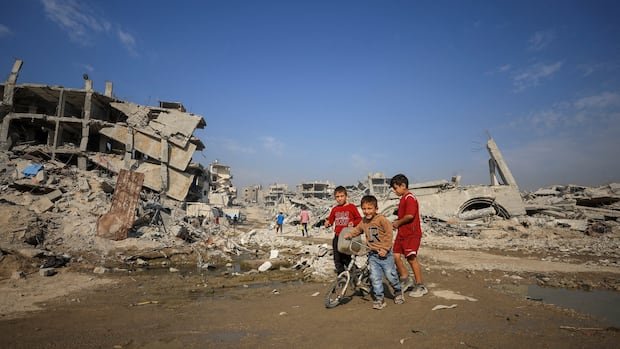
Thousands of containers holding essential items and provisions are currently stagnant in Jordan, Egypt, and Israel, according to humanitarian organizations. They caution that Gaza is receiving minimal aid almost four weeks after the ceasefire agreement between Hamas and Israel commenced.
With the impending colder climate, hundreds of thousands of individuals are still residing in dilapidated makeshift shelters, lacking proper protection from the elements following Israel’s destructive two-year military campaign in the densely populated area.
Angelita Caredda, the Middle East and North Africa Regional Director for the Norwegian Refugee Council (NRC), emphasized the urgent need to shield families from winter hardships. Caredda expressed concern over the insufficient amount of shelter materials reaching Gaza despite the critical necessity for items like tents, bedding, and kitchen sets.
The NRC disclosed that numerous shelter and non-food items are stranded in neighboring countries awaiting clearance for entry into Gaza, leaving approximately 1.5 million vulnerable individuals exposed to deteriorating conditions.
Despite the ceasefire agreement aiming to facilitate aid deliveries, challenges persist with limited trucks reaching Gaza due to Israeli restrictions. The flow of essential supplies remains constrained, with only a fraction of the required aid making its way into the region.
As the situation remains dire, families in Gaza continue to endure hardships without proper shelter, food, or resources. The slow pace of aid delivery exacerbates the risks faced by the population, particularly as the winter months approach.
Efforts to improve the situation have resulted in some progress, with increased access to food reported in certain areas of Gaza. However, disparities persist between different regions, with conditions notably more severe in the northern part of the territory.
Abeer Etefa, a senior spokesperson for the World Food Program, stressed the urgency of the situation, emphasizing the need for swift action and comprehensive support to address the prevailing humanitarian crisis in Gaza.
Challenges in accessing a diverse range of food items, including meat, eggs, and vegetables, further compound the nutrition concerns in Gaza. Additionally, the scarcity of fuel, particularly cooking gas, poses additional obstacles to nutrition efforts and contributes to health risks in the region.
The ceasefire agreement, which came into effect following a period of intense conflict, has brought some relief but significant challenges persist in delivering essential aid to the population. The ongoing efforts to address the crisis require sustained support and timely interventions to alleviate the suffering of the people in Gaza.

