
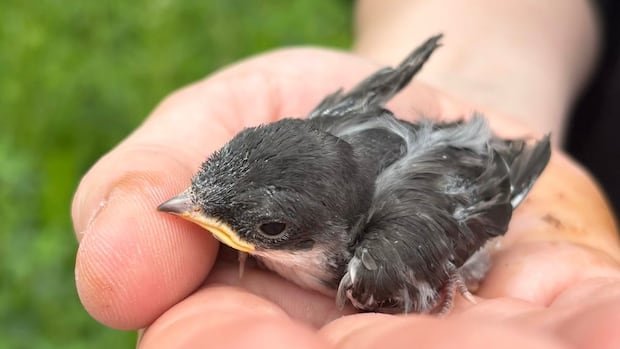
Long Point Bird Observatory, situated on a 40-kilometre sandspit near Lake Erie in southwestern Ontario and recognized as a UNESCO Biosphere Reserve, hosts a variety of wildlife and stands as North America’s oldest continuously operational bird sanctuary.
Recent research, disclosed in the Proceedings of the National Academy of Sciences on June 24, reveals concerning changes in the behavior of tree swallows at Long Point. Since monitoring began in 1969, tree swallows have been laying fewer eggs and diminishing in size. Correspondingly, aerial insectivores like tree swallows have decreased by 43%, with insect populations plummeting by over 60% since 1977. This study, conducted by the University of Michigan and Birds Canada using data from Long Point Bird Observatory, emphasizes these distressing trends.
Lead author Charlotte Probst, a PhD student at the University of Michigan, highlights tree swallows as a valuable study subject due to their nest box nesting habits, allowing researchers to monitor their reproductive patterns non-invasively.
The study indicates a misalignment in timing between the emergence of insects, driven by climate change-induced early warm temperatures, and the breeding habits of tree swallows. This phenological mismatch has led to a decline in bird condition, reflected in smaller body sizes, reduced egg production, and a widening gap between bird migration and peak food availability.
Furthermore, climate change has accelerated the emergence of insects, as observed by PhD candidate Hadil Elsayed from York University at Long Point, causing a disruption in the ecological balance. Elsayed’s work demonstrates a significant shift in insect emergence timing, affecting both terrestrial and aquatic species and attributing the decline to altering landscape vegetation and climate variations.
Addressing the local implications of insect declines, researchers advocate for community efforts such as planting native wildflowers, minimizing pesticide usage, and preserving natural habitats to safeguard insect populations and, consequently, the welfare of tree swallows. This interconnectedness within the ecosystem underscores the critical need for localized conservation actions to maintain biodiversity and sustain wildlife populations.

