
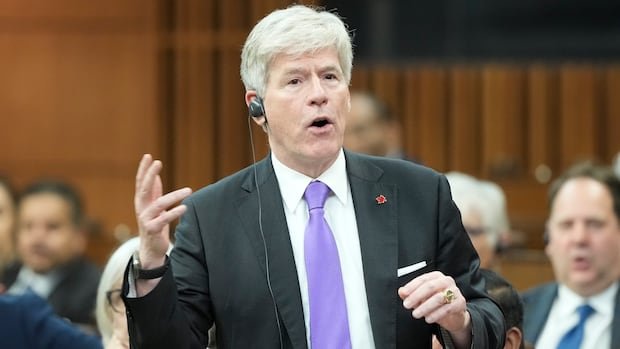
Canada is aiming to construct up to 10 new nuclear reactors within the next 15 years, increase the sale of Canadian-made reactors globally, and double uranium exports, according to Energy Minister Tim Hodgson. Hodgson unveiled a new national strategy for nuclear power, referring to it as a blueprint for a “fresh civilian nuclear renaissance” as the federal government seeks to expand the country’s electrical grid capacity twofold by 2050.
During a news conference in Newmarket, Ont., Hodgson emphasized the necessity of nuclear energy for achieving the goal of doubling the grid and establishing a low-carbon economy within a quarter-century. He highlighted the essential role of nuclear energy in providing clean and dependable baseload power, stating that neglecting this energy source would hinder Canada’s ambition to become an energy superpower.
The strategy outlines the commencement of construction for two new large-scale reactors by 2035, with plans for an additional five reactors to be in the development or planning stages by 2040. Moreover, at least one reactor is set to be under construction outside of Ontario by 2035. Additionally, the strategy sets a target for finalizing a Canadian-made microreactor by 2035, to be deployed in a remote community by the late 2030s.
Conservative Leader Pierre Poilievre expressed skepticism regarding the plan, emphasizing that mere announcements do not equate to concrete progress. Currently, Canada operates four nuclear power plants, with three located in Ontario and one in New Brunswick, collectively generating approximately 15% of the country’s electricity.
Notably, a proposed facility at the existing nuclear plant in Darlington, Ont., is slated to house the first small modular reactor in the G7, capable of producing up to 300 megawatts per unit. Saskatchewan is also exploring the potential introduction of small nuclear reactors by the mid-2030s. Furthermore, an energy agreement between Ottawa and Alberta includes collaboration on developing a nuclear power plant strategy.
Officials from Natural Resources Canada revealed in a background briefing that the construction of the outlined reactors in the national strategy could exceed $100 billion in costs. While the strategy does not specify funding sources, potential options such as the Canadian Infrastructure Bank and the Canada Growth Fund were suggested.
The strategy envisions expanding the sales of Candu reactors to new international markets, aiming to penetrate at least four new markets by 2040 and engaging with six to ten new nuclear entrant markets over a 15-year period, solidifying Canada as their preferred partner. Currently, there are thirty Candu reactors operating globally, including in countries like South Korea, China, and India.
It is crucial to note that Prime Minister Mark Carney was not involved in the development of the strategy, as he maintains an ethics screen that precludes his engagement in such matters. The plan also underscores the importance of using reactor exports to bolster Canada’s position as a dependable uranium export partner and leverage nuclear energy geopolitically.
In the event that Ottawa faces challenges in expanding Candu reactor sales globally, the strategy suggests exploring options to enhance domestic uranium enrichment to supply other reactors, as Candu reactors do not rely on enriched uranium like most conventional reactors. This strategic move aligns with the shift away from Russian uranium supplies by Western allies.
The strategy reaffirms the proposal to transfer impact assessments for nuclear projects from the Impact Assessment Agency of Canada to the Canadian Nuclear Safety Commission, a measure aimed at streamlining processes. However, this proposal is still under consultation, with an extended consultation period due to feedback from environmental and Indigenous groups.
In conclusion, the strategy emphasizes the importance of delivering tangible outcomes rather than making empty promises, underlining the need for focused action to drive progress in the nuclear energy sector.

