
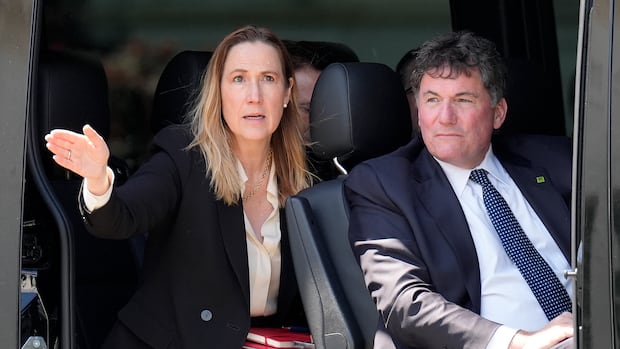
This week in Washington, D.C., high-ranking trade discussions are ongoing between Canadian and U.S. representatives, with Canada aiming to negotiate agreements in particular economic sectors that have been causing friction in trade relations between the two nations.
Dominic LeBlanc, the Minister for Canada-U.S. Trade, along with Privy Council Clerk Michael Sabia and other officials, are concentrating on achieving agreements in the steel, aluminum, and energy industries in the short term.
“While Canada pursues an agreement with the United States, Minister LeBlanc is in Washington, D.C., this week for ongoing discussions with senior U.S. officials,” Jean-Sebastien Comeau, LeBlanc’s spokesperson, shared with CBC News.
Following Prime Minister Mark Carney’s visit to Washington last week, LeBlanc remarked that the Canadian delegation’s interactions with U.S. officials resulted in “positive, substantive conversation on trade issues.”
These discussions are taking place amid rising pressure domestically, where several premiers and mayors are urging Carney to adopt a firmer stance against U.S. President Donald Trump.
LeBlanc indicated that discussions last week concluded with Trump instructing U.S. Commerce Secretary Howard Lutnick and Trade Representative Jamieson Greer to maintain dialogues with their Canadian counterparts to secure agreements in the aluminum, steel, and energy sectors.
“We discussed methods to swiftly reach a deal that we hope will improve conditions for both countries in these critical sectors,” LeBlanc stated.
If agreements can be reached “swiftly,” LeBlanc mentioned that conversations could progress to addressing “other sectors as well.”
Trade war impacts loom large
To compel automakers to shift operations to the U.S., Trump imposed a 25 percent tariff on vehicles and light-duty trucks, excluding the vehicle’s value derived from U.S. components.
This week, Stellantis announced plans to invest $13 billion US over the next four years to enhance its manufacturing capabilities, resulting in the creation of over 5,000 jobs across Illinois, Ohio, Michigan, and Indiana.
The company, which was formerly Chrysler, revealed that the Jeep Compass, originally intended for production at the Brampton Assembly Plant, will be moved to the Belvidere Assembly Plant in Illinois, although they maintain intentions for the Brampton facility.
This decision has frustrated both the federal government and the Ontario government, which in 2023 reached an agreement with Stellantis-LG Energy Solutions to provide performance incentives totaling up to $15 billion for batteries produced by Stellantis.
As part of this agreement, Stellantis was obligated to “uphold its existing commitments in Canada and Ontario, including a production mandate at its Brampton plant.”
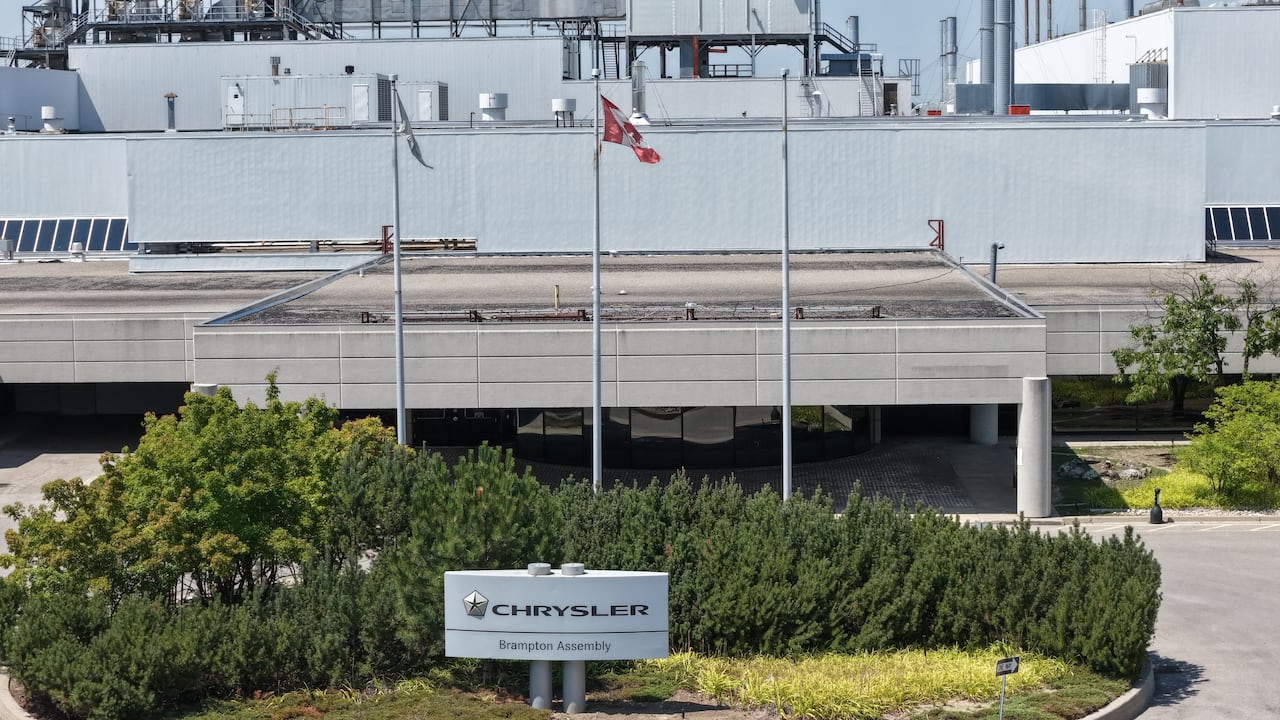
The Jeep Compass, which was to be manufactured at the Brampton Assembly Plant, is now being relocated to the Belvidere Assembly Plant in Illinois. (Patrick Morrell/CBC)
In New Brunswick on Wednesday, Industry Minister Mélanie Joly expressed her deep disappointment regarding the decision.
“The company has obligations under various agreements with the government, including support for the retooling of the very Brampton facility that is currently not in use,” she stated. “We will ensure that we hold the company accountable.”
Carney mentioned on Tuesday that the decision is a direct result of U.S. tariffs, and his government will collaborate with Stellantis to foster new opportunities in and around Brampton.
“We expect Stellantis to honor the commitments they have made to the workforce in Brampton,” he stated.
In a statement, Trump acknowledged that Stellantis’s decision was entirely influenced by his tariff policies, emphasizing the president’s “vision for American economic dominance.”
Ontario Premier Doug Ford stated that the company must fulfill its promises to its workers.
“I don’t understand. They’re investing $13 billion in the U.S. — we’re an auto manufacturing powerhouse here,” Ford said on Wednesday.
Premiers urge Carney to prioritize lumber tariffs
On Tuesday, the U.S. imposed an additional 10 percent tariff on top of the existing 35 percent tariff on Canadian lumber. Furthermore, the U.S. has also levied a 25 percent tariff on Canadian wood products, including furniture.
Prime Minister Mark Carney had pledged $1.2 billion in support for the softwood lumber sector in August, but the aid has yet to materialize.
B.C. Forestry Minister Ravi Parmar expressed his desire to see that funding “not tomorrow, but today.”
“We cannot afford to wait. Our forest industry here in Canada is at stake,” he stated.
The commitment includes up to $700 million in loan guarantees for forestry firms and $500 million, primarily in grants and contributions, to stimulate product development and finance retraining for lumber workers.
Eby remarked that often, provinces like Ontario and Quebec dominate the attention of federal leaders — leaving B.C. and issues that mainly affect British Columbians largely overlooked. The premier expressed his desire for the same “respect, concern, and sense of urgency” to be directed toward the forestry sector.
New Brunswick Premier Susan Holt has also reached out to Carney, urging the government to prioritize resolving softwood lumber tariffs.
Joly informed the Fredericton Chamber of Commerce on Wednesday that support for the lumber industry would be forthcoming.
“There is a combination. There is support for operations, so liquidity assistance because we understand that many companies can be caught in a debt spiral while facing these unjustifiable tariffs. Additionally, there is … funding for capital expenditures to allow them to continue investing in their businesses,” Joly explained.

