
Welcome to our weekly newsletter highlighting environmental trends and solutions for a more sustainable world.
Anand Ram reflects on air quality concerns amidst the pandemic and recurring wildfire smoke episodes. How can we raise awareness about invisible yet harmful air pollutants?
This week’s topics include:
– The concept of wearing an air-quality alert system
– The impact of El Niño on global health
– Solar power initiatives in Arctic regions
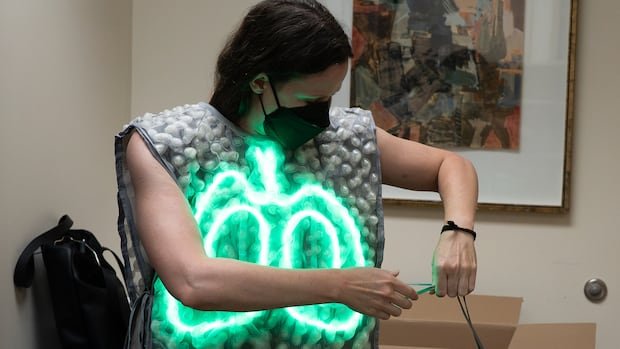
Grace Grothaus, a postdoctoral researcher at York University, introduces the AtmoSpheres 01 prototype, a wearable device that visually represents air quality. The device illuminates green lungs to indicate safe air quality levels, making invisible pollutants visible.
The prototype, designed by Grothaus during her studies at the University of California San Diego, detects PM2.5 and black carbon, translating this data into colored lights based on the U.S. Environmental Protection Agency’s air quality index.
Artists like Michael Pinsky use creative installations to address environmental issues. Pinsky’s Pollution Pods project offers immersive experiences simulating the air quality of different cities, emphasizing the impact of pollution on human senses.
Grothaus is developing AirWear, a portable air quality sensor designed through community collaboration. The device aims to raise awareness and empower communities to monitor air quality, emphasizing the importance of combining art and community research for practical solutions.
In Naujaat, Nunavut, the Ikayuut solar and energy storage project marks a significant step towards renewable energy. The project, a collaboration between various organizations, aims to reduce diesel consumption and empower local communities through sustainable energy solutions.
The project’s success highlights the potential for future renewable energy initiatives in Nunavut. By harnessing local energy sources and reducing reliance on imported diesel fuel, communities can achieve more sustainable energy practices.
For more environmental insights, subscribe to our weekly newsletter. Your feedback and contributions are always welcome at whatonearth@cbc.ca.

