
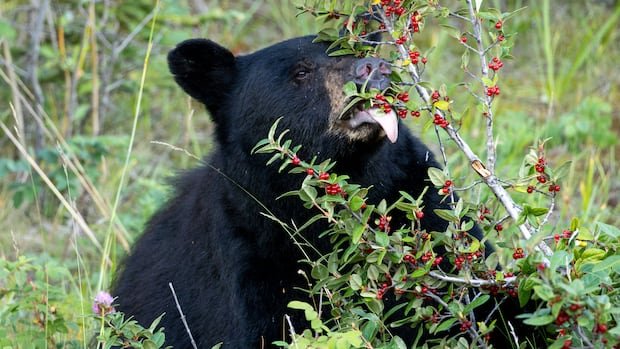
A scarcity of blueberries in their natural environment is a key reason why bears are increasingly venturing closer to residential neighborhoods in northwestern Ontario, as stated by a retired research scientist working with the Ministry of Natural Resources (MNR) in the Wildlife Research and Monitoring division.
Martyn Obbard highlighted that blueberries serve as the primary food source for bears during late summer and fall, aiding them in building up weight for the approaching winter months. He mentioned to CBC Thunder Bay that this summer’s widespread droughts had a severe impact on the blueberry crop across Ontario, leaving bears struggling to find ample natural sustenance.
The necessity for bears to pack on weight before hibernation drives them to seek out alternative food sources when their natural diet falls short. This drives them towards human settlements such as houses, restaurants, and garbage dumps, where food is more easily accessible, as explained by Obbard.
Following a recent bear incident in the region, Obbard spoke with CBC News about the situation. A bear in Nipigon, Ont., intruded into a couple’s home on Tuesday night, prompting their dog to confront the wild animal until authorities arrived.
The bear managed to enter the residence through the back door when the couple was letting their dog out late at night, as reported by Kim Rodak, a spokesperson for Northwest Ontario Provincial Police (OPP).
During the encounter, the couple sought refuge in a bedroom and called for help while barricading themselves. The bear roamed around the house and eventually ended up in the basement before being confronted by the family dog until law enforcement intervened.
The couple sustained non-life-threatening injuries and were transported to a hospital for treatment. This incident marked the second reported black bear attack in northern Ontario within a month, following a similar incident in Sault Ste. Marie in late August.
In light of the recent bear encounters, a spokesperson from the MNR emphasized the impact of berry availability on bear behavior. In years with abundant berry crops, bears tend to remain in forested areas. However, when berry yields are low, bears may venture further into developed regions in search of sustenance, especially during the pre-hibernation period in the fall.
Obbard underscored the physiological drive for bears to accumulate body weight in preparation for winter hibernation. He noted that with climate change affecting natural food supplies, bears straying into residential areas due to food scarcity could become more commonplace in the future.
Despite the rare occurrence of predatory black bear attacks, Obbard noted that habituated bears approaching human settlements could lead to potential encounters. The MNR emphasized the importance of awareness and safety measures for residents, such as bear-proofing garbage bins and carrying bear spray when hiking.
The Ministry reported an increase in bear sightings compared to previous years, attributing the trend to fluctuating food availability and bears’ ability to travel extensively in search of sustenance. They advised caution for individuals entering wooded areas, recommending the carrying of bear deterrents like bear bangers and spray for added safety.

